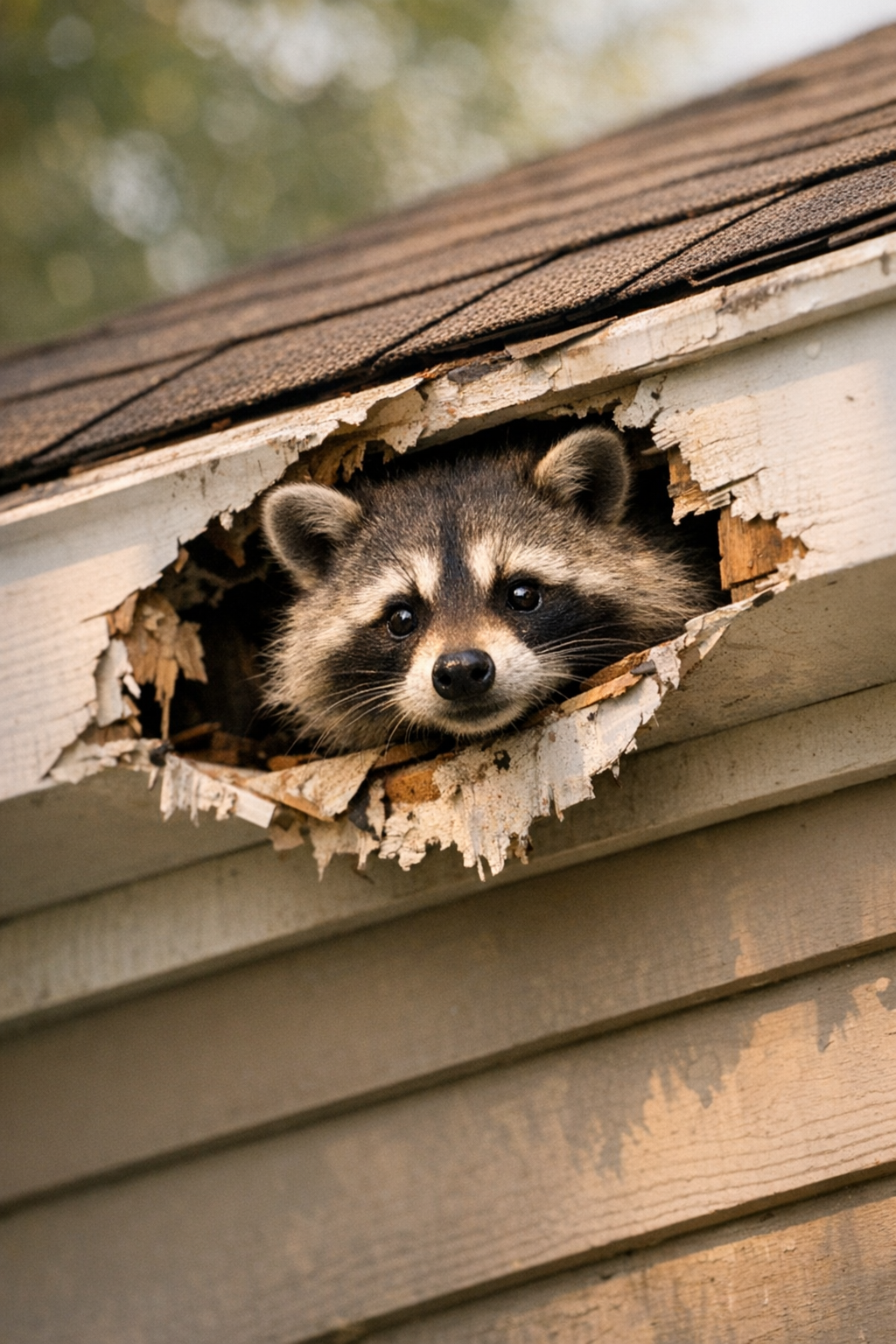
If you've been lying awake at night listening to something heavy moving around above your bedroom ceiling, you're not alone. Raccoon infestations in attics are one of the most common wildlife problems we deal with in Louisville and Southern Indiana, and the signs are usually pretty hard to miss once you know what to look for.
Raccoons are not subtle houseguests. They're large animals — adults typically weigh between 10 and 30 pounds — and they make no effort to be quiet. Unlike squirrels, which tend to scurry and scratch, raccoons thump. You'll hear what sounds like a small child walking around up there, often in the early morning hours or just after dark when they're most active.
The first thing most homeowners notice is the noise. But by the time you're hearing raccoons clearly, they've usually been in your attic for a while. Here's a breakdown of the most reliable signs that raccoons have moved in.
Heavy Thumping and Vocalizations at Night
Raccoons are nocturnal, so most of their activity happens between dusk and dawn. The sounds you'll hear are distinctly different from squirrels or mice. Think heavy footsteps, rolling sounds (they sometimes roll objects around), and occasional vocalizations — chittering, growling, or a crying sound that can be alarming if you've never heard it before.
That crying sound is especially important. If you hear what sounds like a baby crying in your attic, there's a good chance a female raccoon has given birth up there. Spring is baby season in Louisville, typically running from March through May. A mother raccoon with a litter is a more complex removal situation, and it's one of the reasons you shouldn't wait to call a professional.
Torn Shingles, Bent Vents, and Damaged Soffits
Raccoons are strong and persistent. They don't squeeze through gaps the way squirrels do — they tear their way in. Walk around the exterior of your home and look for bent or pulled-back roof vents, torn soffit panels, or shingles that look like they've been pried up near the roofline. These are classic raccoon entry points.
Pay special attention to the corners where your roof meets the fascia board, and anywhere there's a gap or weak point in the roofline. Raccoons are excellent climbers and will use downspouts, trees, and even your chimney to access the roof. Once they find a weak spot, they'll work at it until they're in.
If you see muddy paw prints on your downspouts or siding, that's another strong indicator. Raccoon tracks are distinctive — five toes on both front and back feet, with the back foot resembling a small human handprint.
Strong Odors and Ceiling Stains
Raccoons use specific areas of your attic as latrines. Over time, the accumulation of urine and feces creates a strong ammonia smell that can permeate through your ceiling. If you notice a persistent, unpleasant odor in certain rooms — especially bedrooms or areas directly below the attic — that's a serious warning sign.
In more advanced infestations, you may start to see brown staining on your ceiling. This happens when raccoon urine soaks through the insulation and drywall. At that point, you're not just dealing with a wildlife problem — you're dealing with a contamination issue that requires professional cleanup.
Raccoon droppings also carry raccoon roundworm (Baylisascaris procyonis), a parasite that can be dangerous to humans and pets. The eggs can remain infectious in soil or insulation for years. This is one of the main reasons DIY raccoon removal is not a good idea — the cleanup phase is just as important as the removal itself.
Toppled Trash Cans and Disturbed Yard
Before raccoons move into your attic, they're usually spending time around your property. Knocked-over trash cans, disturbed compost bins, and rolled-back sod (raccoons dig for grubs) are all signs that raccoons are active on your property and may be scouting for a den site.
If you're seeing these signs in your yard, it's worth doing a quick inspection of your roofline and attic access points. Catching the problem before they get inside is always easier and less expensive than dealing with an established infestation.
What to Do If You Suspect Raccoons
The most important thing is not to wait. Raccoons cause damage quickly. They tear up insulation for nesting material, contaminate large areas with waste, and can chew on wiring. A small problem can become a major one in a matter of weeks, especially during baby season when a single female can have a litter of three to seven kits.
Don't try to seal entry points yourself without confirming the animals are out first. Trapping animals inside your attic creates a much worse problem — they'll tear through walls trying to escape, and if they die inside, you'll have a serious odor and sanitation issue on your hands.
Call a licensed wildlife removal professional who can do a proper inspection, identify all entry points, remove the animals humanely, and seal everything up with materials that raccoons can't chew through. At Wildlife Ridders, we back all of our exclusion work with a lifetime no-entry guarantee. If a raccoon gets back in through one of our sealed points, we fix it for free.
If you're hearing noises in your attic or seeing any of the signs described above, give us a call at (502) 200-9943. We offer same-day service in most cases and free quotes on all repair work.