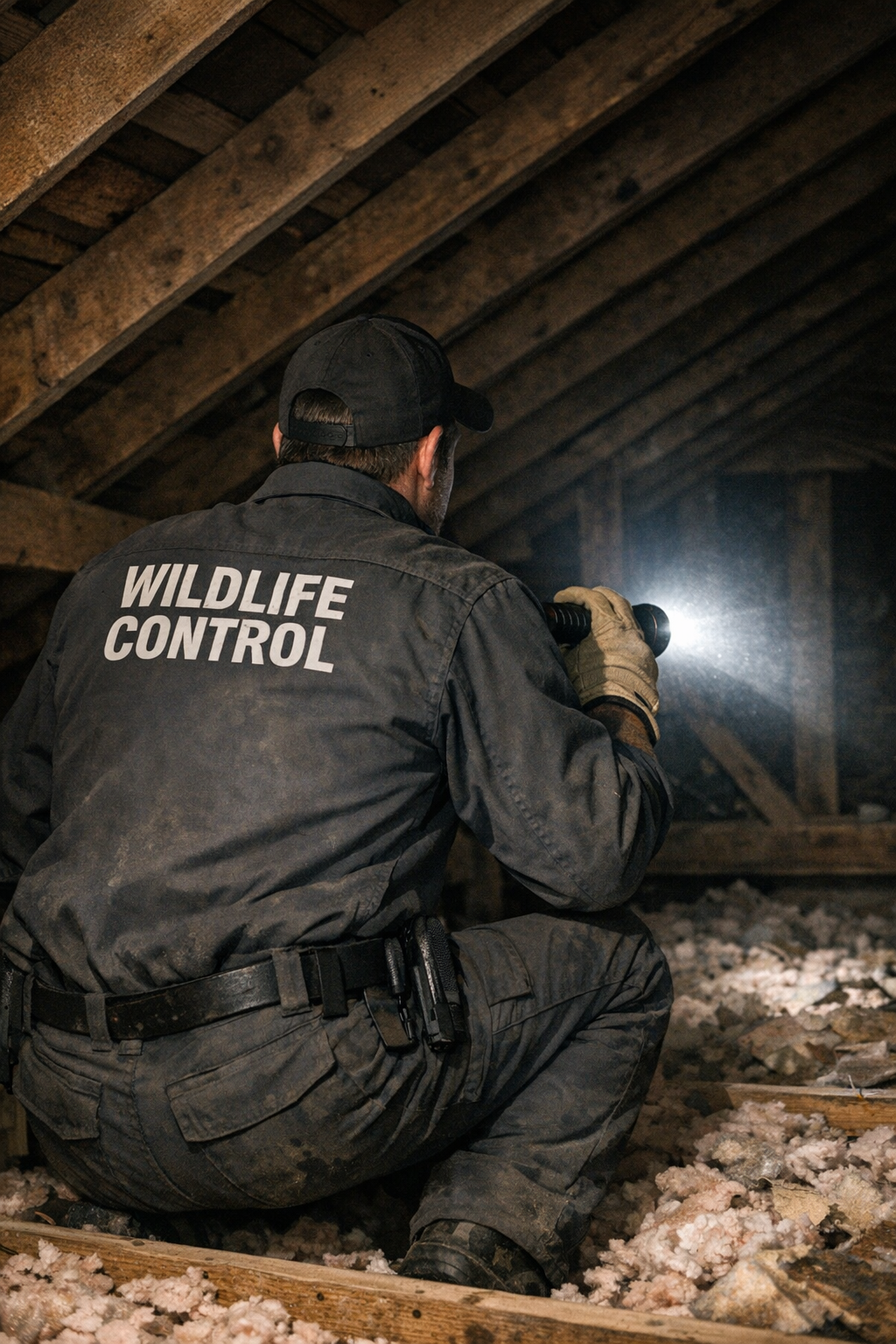
The single most common phone call we get starts the same way: "I keep hearing something in the attic at night." The good news is that the timing, sound, and location of attic noises tell us a lot about what's up there — often before we ever set foot on a ladder.
Here's how to read the noises you're hearing, and why nighttime activity narrows the suspect list considerably.
Decoding the Sound: Who's Up There?
Heavy thumping, walking sounds, or something being dragged: that's a raccoon. Adults weigh 10 to 30 pounds and sound like a small child walking above your ceiling. You may also hear chittering or crying — a strong sign of a mother with kits, especially March through May.
Light, fast scurrying that stops and starts: rodents. If it happens at dawn and dusk, think squirrels. If it's persistent through the middle of the night with faint gnawing, think mice or rats. Squirrels are commuters — they leave during the day — while rats and mice are active in bursts all night.
Fluttering, faint squeaking, or a soft crawling sound near the eaves at dusk: bats. A single bat is quiet; a colony makes a distinctive rustling as they exit around sunset. Slow, deliberate scratching with an occasional hiss can be an opossum, which usually den in attics only briefly.
Why Night Noises Are the Norm
Most attic wildlife in Kentucky is nocturnal or crepuscular. Raccoons, opossums, bats, mice, and rats do their traveling and foraging at night, which is why your attic goes quiet at 9 AM and comes alive at 10 PM. The one big exception is squirrels — daytime noise, especially early morning, points strongly to them.
The noise also gets louder over time, and that's not your imagination. Nesting animals expand their territory, litters grow up and start moving around, and entry holes get enlarged. A noise you've been tolerating for a month represents a bigger problem than the one you first heard.
What to Do Tonight (and What Not to Do)
Note the time, location, and character of the noise — that information genuinely helps the inspection. If it's safe, check your roofline from the ground with a flashlight at dusk and watch for animals entering or exiting.
Don't bang on the ceiling repeatedly (a startled mother may move kits deeper into wall voids), don't set poison (a dead animal in a wall is a worse problem), and above all don't seal any holes until you know the attic is empty.
We offer same-day inspections across Louisville and Southern Indiana, and we can usually identify your nighttime tenant on the first visit. Call (502) 200-9943 and tell us what you're hearing.