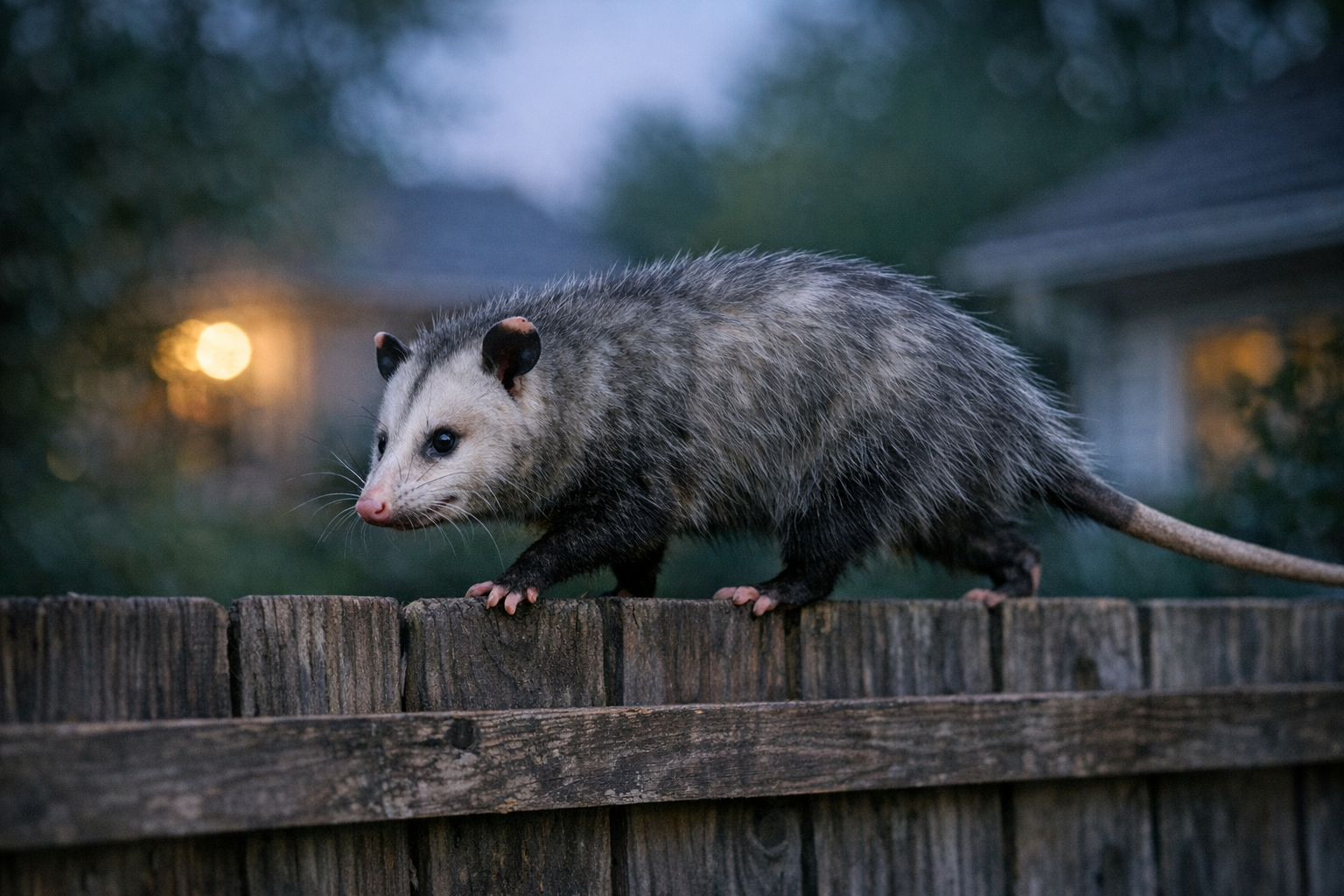
The opossum has the strangest reputation in Kentucky wildlife: half pest, half folk hero. North America's only marsupial hisses like a menace, plays dead under pressure, and — according to the internet — eats thousands of ticks. So should you worry when one shows up in your yard?
The honest answer: usually not, until it moves in. Here's how to think about opossums like a wildlife professional does.
The Case for Leaving Opossums Alone
A passing opossum is close to the ideal wild neighbor. They're nomadic, rarely staying anywhere more than a few days. They clean up what other animals leave — fallen fruit, carrion, slugs, beetles, and yes, ticks (the famous tick-vacuum numbers are debated, but they do groom ticks off themselves compulsively). Their body temperature is too low for rabies to take hold easily, making them one of the lowest rabies risks among wild mammals.
The hissing, open-mouthed display is nearly all bluff. An opossum's real defenses are waddling away and involuntary catatonia — 'playing possum.' They don't dig burrows, rarely cause structural damage, and mostly borrow dens other animals abandoned.
When Opossums Become a Real Problem
The trouble starts when 'passing through' becomes 'living under.' Opossums readily den under decks, sheds, and porches and occasionally in attics and crawl spaces they can reach by climbing. A resident opossum means concentrated droppings (theirs are large, and they're prolific), a strong musky odor, torn insulation or ductwork in crawl spaces, and the fleas and ticks they carry set up shop near your house.
The one health caution worth knowing: opossum droppings can carry the organism responsible for EPM, a serious neurological disease in horses — a real concern for the many barn properties in Oldham, Shelby, and surrounding counties. And a mother with up to a dozen joeys in the pouch complicates any removal from May through summer.
The Right Response
If an opossum is just visiting: secure the trash lid, take pet food in at night, and let it move along — it will. If one is denning under a structure, the fix is the same humane playbook we use for skunks: confirm occupancy (including young), remove or evict the animal, then trench steel barrier mesh around the structure base so nothing dens there again.
Don't try to grab one, and don't poison — both illegal and ugly in outcome. If you're seeing an opossum nightly or smelling that musky den odor under the deck, call (502) 200-9943 and we'll sort out visitor versus tenant with an inspection.