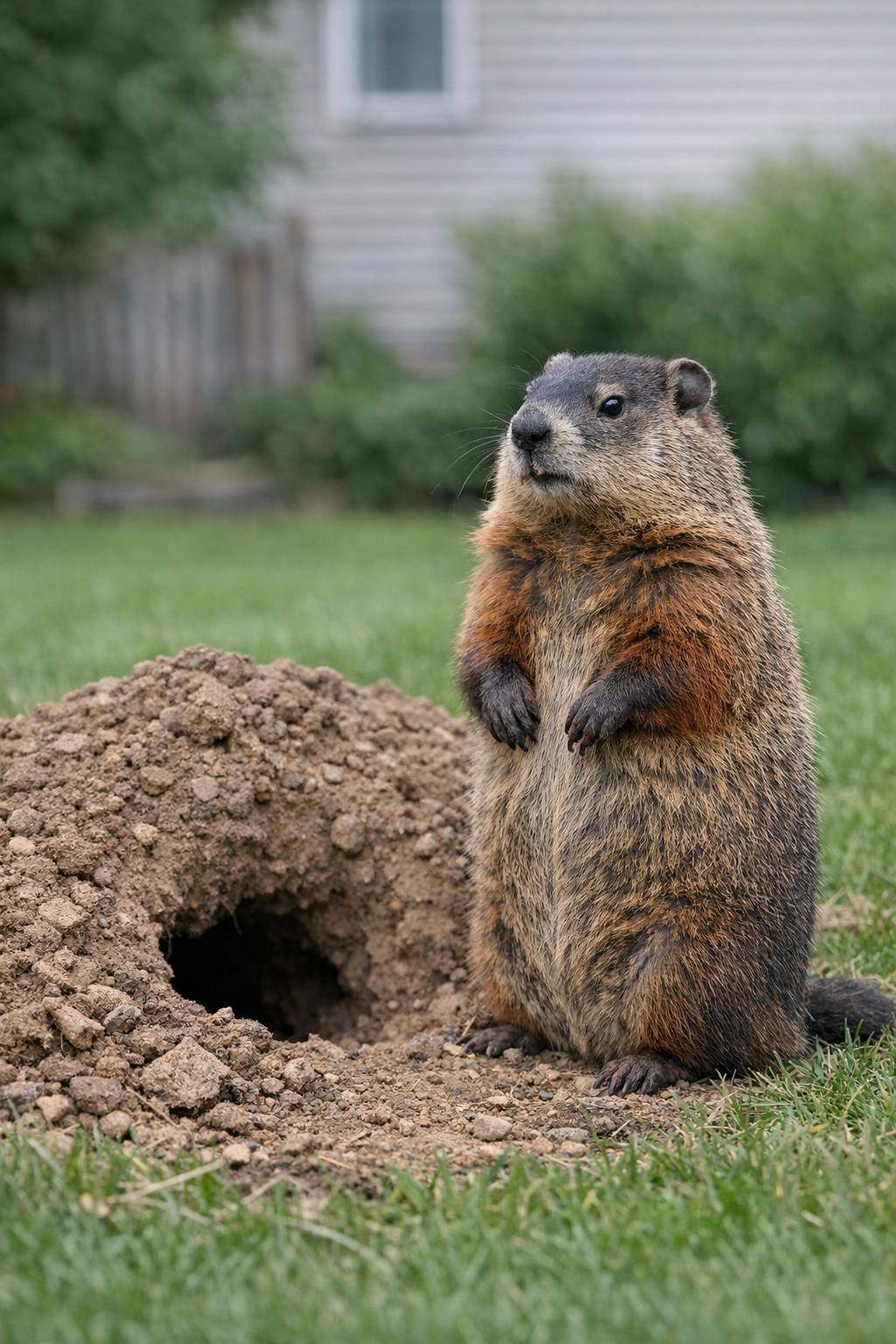
Groundhogs (also called woodchucks) are the largest members of the squirrel family in Kentucky, and their burrows are engineering projects: 25 to 45 feet of tunnel, multiple chambers, and up to 700 pounds of excavated soil. When that project happens under your shed, deck, or foundation, it stops being charming.
Here's how to recognize groundhog activity, why the burrows are a genuine structural concern, and what actually works to stop the damage.
Recognizing a Groundhog Burrow
The main entrance is unmistakable once you know it: a hole 10 to 12 inches across with a large fan of excavated dirt spread outside it. Burrow systems also include one or more 'plunge holes' — cleaner, dirt-free secondary exits dug from below that let a groundhog escape a predator in any part of its territory.
Favorite locations are exactly the ones that cause problems: along foundations, under sheds and decks, beneath porches and concrete slabs. Beyond the digging, groundhogs are voracious herbivores — a single animal can strip a vegetable garden in a few nights and gnaws woody plants, deck posts, and siding corners to wear down its teeth.
Why the Damage Is More Than Cosmetic
The structural issue is undermining. A burrow network under a slab, shed footing, or shallow foundation removes the supporting soil, and over time that means cracking concrete, tilting sheds, and settling porches. Water follows the tunnels too, channeling runoff along your foundation where you least want it.
Abandoned burrows also don't stay empty. Skunks, opossums, foxes, and rabbits readily move into vacant groundhog tunnels — so an unaddressed burrow system can serve up a rotating cast of wildlife problems for years.
What Actually Works
Repellents, gum, gas cartridges in occupied burrows near structures, and flooding attempts consistently disappoint. Effective control is trapping the resident animal (with attention to spring timing, since females have young in the burrow from April through June) followed by exclusion.
The exclusion that lasts is a buried barrier: heavy galvanized mesh trenched 12 or more inches down and flared outward in an L-shape around decks, sheds, and porches. Groundhogs dig down at the barrier, hit mesh, and give up. We install these barriers routinely and back them with our lifetime no-entry guarantee.
If your lawn has developed craters or something is excavating under your shed, call (502) 200-9943 — we'll confirm what's digging with an inspection and give you a written plan to end it.