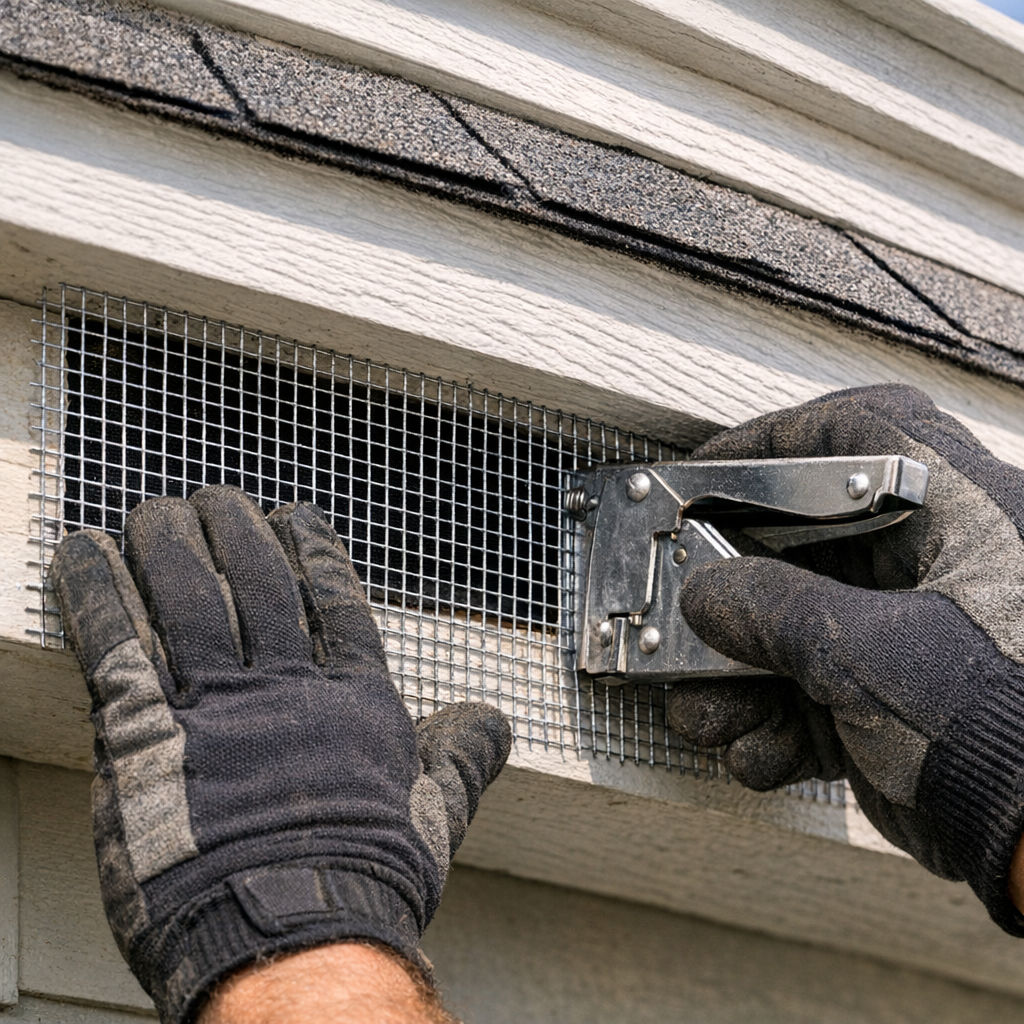
Exclusion is the foundation of effective, long-term wildlife control. It's the difference between solving a wildlife problem and just temporarily relocating it. When done properly, exclusion prevents wildlife from re-entering your home — not just the animals you removed, but any future animals that might try to get in.
Here's a detailed look at the exclusion methods we use and why they work.
What Is Wildlife Exclusion?
Wildlife exclusion is the process of identifying and permanently sealing all the ways that animals can enter your home. It's distinct from trapping and removal, which addresses the animals that are currently inside. Exclusion addresses the structural vulnerabilities that allowed them to get in in the first place.
Think of it this way: if you trap and remove a family of raccoons from your attic but don't seal the entry point they used, you haven't solved the problem. You've just created a vacancy. New raccoons — or other animals — will find that same entry point and move in.
Effective exclusion requires a thorough inspection of the entire exterior of your home, identifying not just the active entry points but all the potential entry points that could be exploited in the future.
One-Way Exclusion Devices
For active infestations, the first step is usually installing one-way exclusion devices over the primary entry points. These devices allow animals to exit but prevent them from re-entering.
For bats, one-way tubes or netting are installed over the entry points. Bats can crawl out through the tube or under the netting, but can't find their way back in. For squirrels and raccoons, one-way door traps or exclusion funnels serve the same purpose.
The key to one-way exclusion is that it's humane — the animals leave on their own, without being trapped or stressed. It also ensures that no animals are accidentally sealed inside, which would create a much worse problem.
After the animals have vacated — which typically takes a few days to a couple of weeks — the one-way devices are removed and the entry points are permanently sealed.
Materials That Actually Work
This is where a lot of DIY exclusion attempts fail. Foam sealant, caulk, and wood are not effective exclusion materials for most wildlife. Raccoons and squirrels can chew through foam in minutes. Wood can be gnawed through. Even metal flashing, if it's thin enough, can be bent or torn.
Effective exclusion materials include 1/4-inch hardware cloth (galvanized steel mesh), which is used to cover vents, gaps, and openings. It's strong enough that animals can't chew through it and flexible enough to conform to irregular shapes. Heavy-gauge steel flashing is used for larger gaps and areas where animals have been actively chewing. Concrete and mortar are used for gaps in masonry foundations. Commercial-grade sealants that incorporate steel mesh are used for smaller gaps around pipes and utility lines.
At Wildlife Ridders, we use construction-grade materials for all exclusion work. We don't use foam. The goal is a repair that will last for decades, not one that needs to be redone in a year or two.
The Importance of a Complete Inspection
The most common reason exclusion work fails is an incomplete inspection. If you seal the entry point you know about but miss three others, the animals will simply use the ones you missed.
A thorough exclusion inspection covers the entire exterior of the home — roofline, soffits, fascia, foundation, utility penetrations, chimney, and any other potential entry points. It also includes the interior of the attic, where you can often see light coming through gaps that aren't visible from the outside.
For bat exclusion specifically, the inspection is often done at dusk when bats are emerging, so we can see exactly where they're exiting. This is the most reliable way to identify all the entry points in a bat infestation.
If you're concerned about wildlife getting into your home, or if you've already had an infestation and want to make sure it doesn't happen again, call us at (502) 200-9943 for a thorough inspection and exclusion assessment.