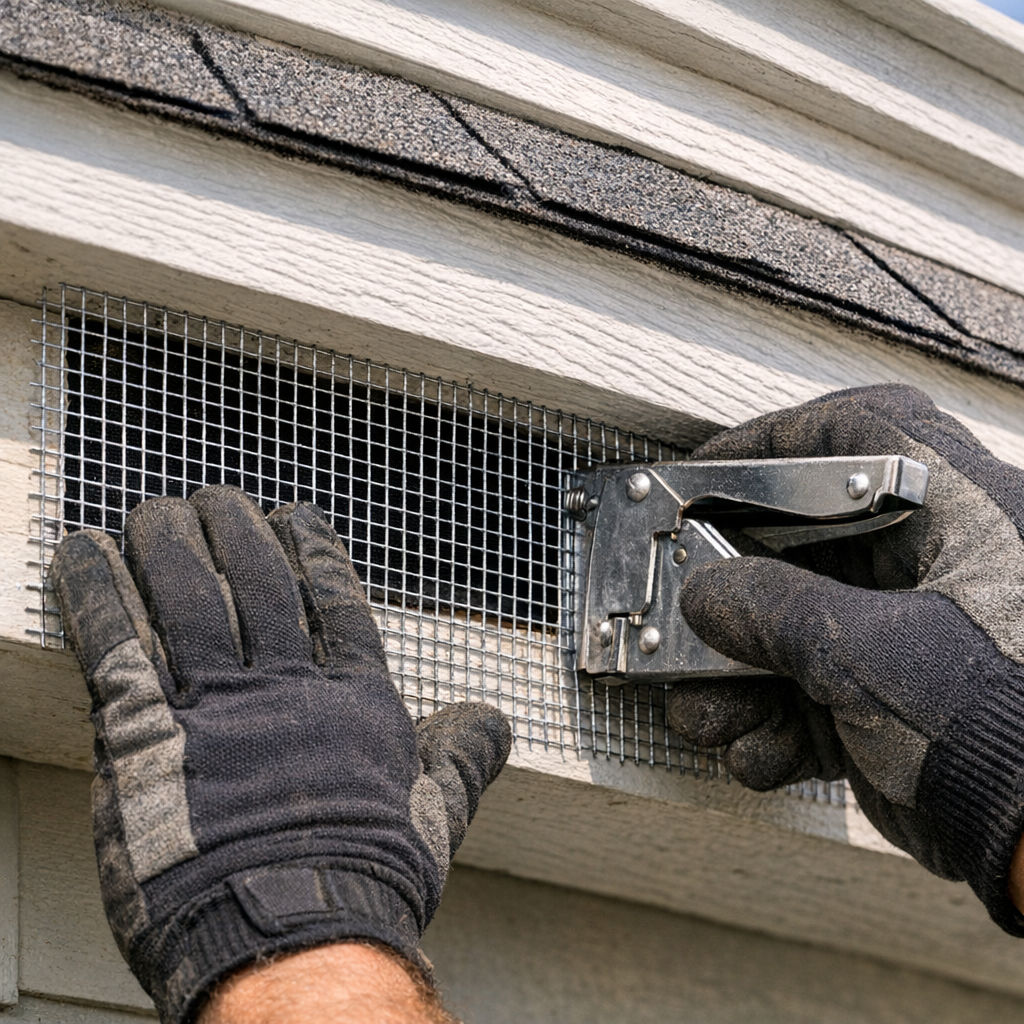
If one tool defines modern humane wildlife control, it's the one-way door: a simple device mounted over an entry point that lets animals exit normally but blocks the return trip. No capture, no handling, no relocation stress — the animal evicts itself on its own schedule.
Here's how one-way doors work, why they're usually better than trapping, and the situations where they must not be used.
How a One-Way Door Works
The device is a tube or cage with a gravity- or spring-hinged flap mounted directly over the animal's entry hole, with every other potential opening sealed first — that last part is the real work. The animal pushes out easily to forage (they all leave to feed), and the flap closes behind it. Coming home, it can't work the flap from outside, and after a few nights of trying, it relocates to a backup den site. Raccoons, squirrels, and opossums all maintain multiple den options, so eviction sends them to a place they already know.
For bats the same principle takes the form of exclusion tubes or netting valves — bats drop out at dusk and can't crawl back in. The devices stay up for days to a couple of weeks, we verify the structure is empty, then the final opening is permanently sealed with steel.
Why It Beats Trapping in Most Cases
For the animal: no trap stress, no exposure in a cage, no relocation to unfamiliar territory — relocated animals fare poorly, and both Kentucky and Indiana restrict relocation of species like raccoons for disease-management reasons. Self-eviction to a known backup den is simply a better outcome.
For the homeowner: nothing to check twice a day, no risk of catching the neighbor's cat or a skunk, no animal handling on your property, and — because one-way doors force the complete seal-first workflow — the job ends with your house properly closed up. Trapping-only jobs routinely skip that step, which is why they repeat annually.
It's also self-solving in a way trapping isn't: a one-way door works on the animal you haven't seen yet. If three squirrels are using the entry, all three end up outside, regardless of what you assumed the count was.
When One-Way Doors Must Wait
The hard rule: never install a one-way door when dependent young are inside. From roughly March through August, that has to be positively ruled out first. A mother excluded from her litter will assault your roofline trying to get back in, and if she fails, the litter dies in the structure. When young are present, the plan changes to hand-removal and reunion, or to waiting until they're mobile enough to exit on their own.
Bats add the regulatory version: no exclusion during maternity season (about June through mid-August here), when flightless pups can't follow their mothers out.
Done at the right time with the seal-first workflow, one-way door exclusion is the cleanest resolution wildlife control offers. It's our default method, and our seals carry a lifetime no-entry guarantee. Questions about whether it fits your situation? Call (502) 200-9943.