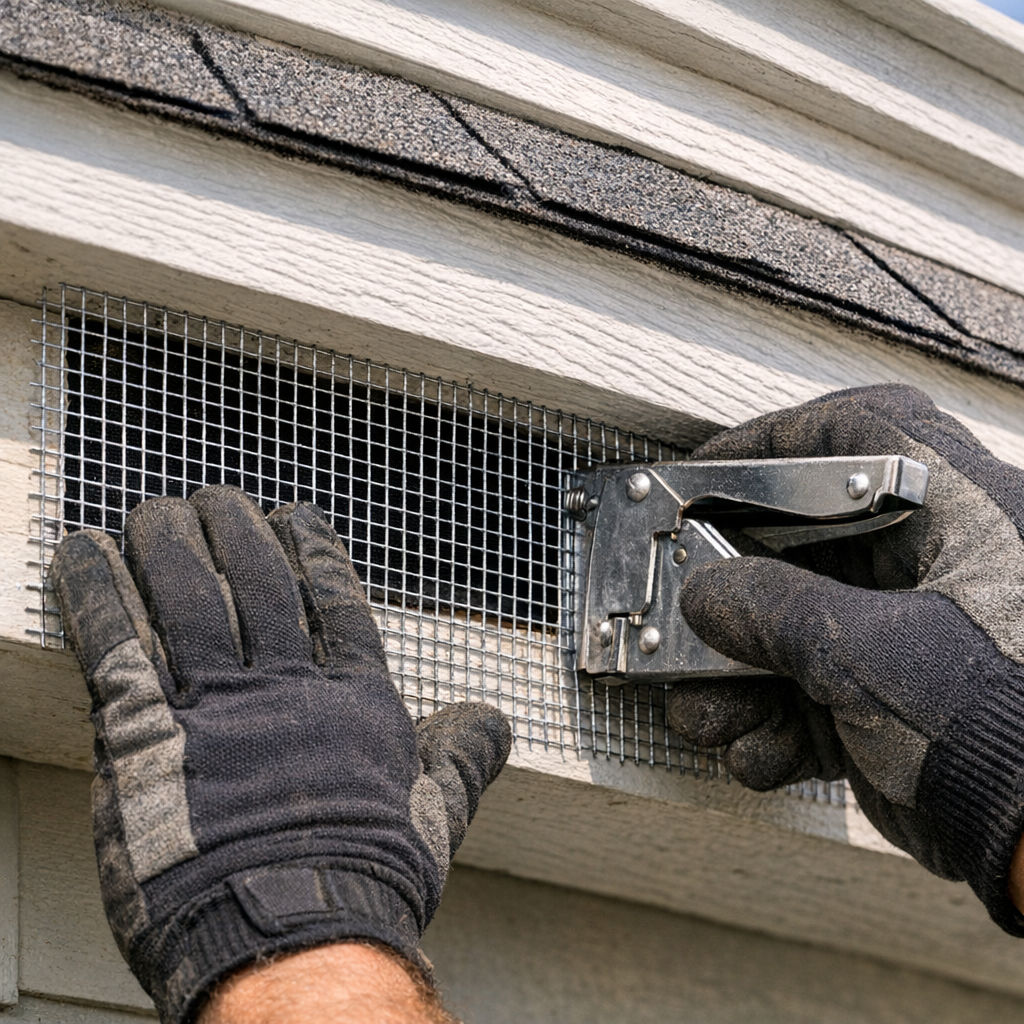
It's the most tempting shortcut in wildlife control, and it's also the most expensive mistake we see homeowners make: you find the hole the animals are using, wait until things sound quiet, and seal it up with foam, wood, or steel. Problem solved — until it becomes a much bigger problem.
Sealing an entry point while animals are still inside doesn't remove them. It traps them. And a trapped animal inside your walls or attic behaves very differently from one that can come and go.
What Actually Happens When You Trap an Animal Inside
A sealed-in animal has two options: escape or die. Both are bad for your house. Squirrels and raccoons will chew and claw with astonishing determination when trapped — through drywall, wiring, ductwork, and even soffit from the inside out. We've seen raccoons tear a brand-new hole through a roof deck within a day of being sealed in, and squirrels emerge through a bedroom ceiling.
If the animal can't escape, it dies inside the structure — usually somewhere inaccessible like a wall void or under blown-in insulation. The odor from a decomposing raccoon can make rooms unusable for weeks, and locating and removing a carcass from a wall costs far more than a proper removal would have.
The worst-case scenario is baby season. From March through May (and again in late summer for some species), the animal you hear moving around is very often a mother with a litter. Seal her out while she's foraging, and the babies die inside — and a frantic mother raccoon on the outside of that seal will do extraordinary damage trying to get back to them.
How Professionals Confirm a Structure Is Empty
Proper exclusion always confirms the structure is empty before anything is permanently sealed. The standard tool is a one-way door: a device mounted over the entry point that lets animals exit normally but blocks re-entry. Animals leave to feed, can't get back in, and relocate on their own — no trapping, no orphaned litters, no carcasses in the walls.
Before installing one-way doors, we inspect the attic for babies. If a litter is present, the approach changes: depending on species and age, that can mean waiting until the young are mobile, removing them by hand and reuniting them with the mother outside, or using a heated reunion box. Bats add a legal layer — they're protected, and exclusion is prohibited during maternity season (roughly June through mid-August in Kentucky) when flightless pups are present.
We also 'soft block' suspect openings with paper or insulation before final sealing. If the material stays undisturbed for several days, the opening is inactive and can be permanently closed.
The Right Order of Operations
Effective wildlife control always follows the same sequence: inspect the whole structure, identify every entry point, confirm what species and how many animals are present, get every animal out through one-way devices or hands-on removal, and only then seal everything with chew-proof materials.
If you've already sealed a hole and are now hearing frantic scratching or smelling something wrong, don't wait — reopen the seal if you can do so safely, and call a professional immediately. Time matters for both the animal's welfare and your repair bill.
Wildlife Ridders provides same-day inspections across Louisville and Southern Indiana, and every exclusion we perform is backed by a lifetime no-entry guarantee. Call (502) 200-9943 before you pick up the foam gun.