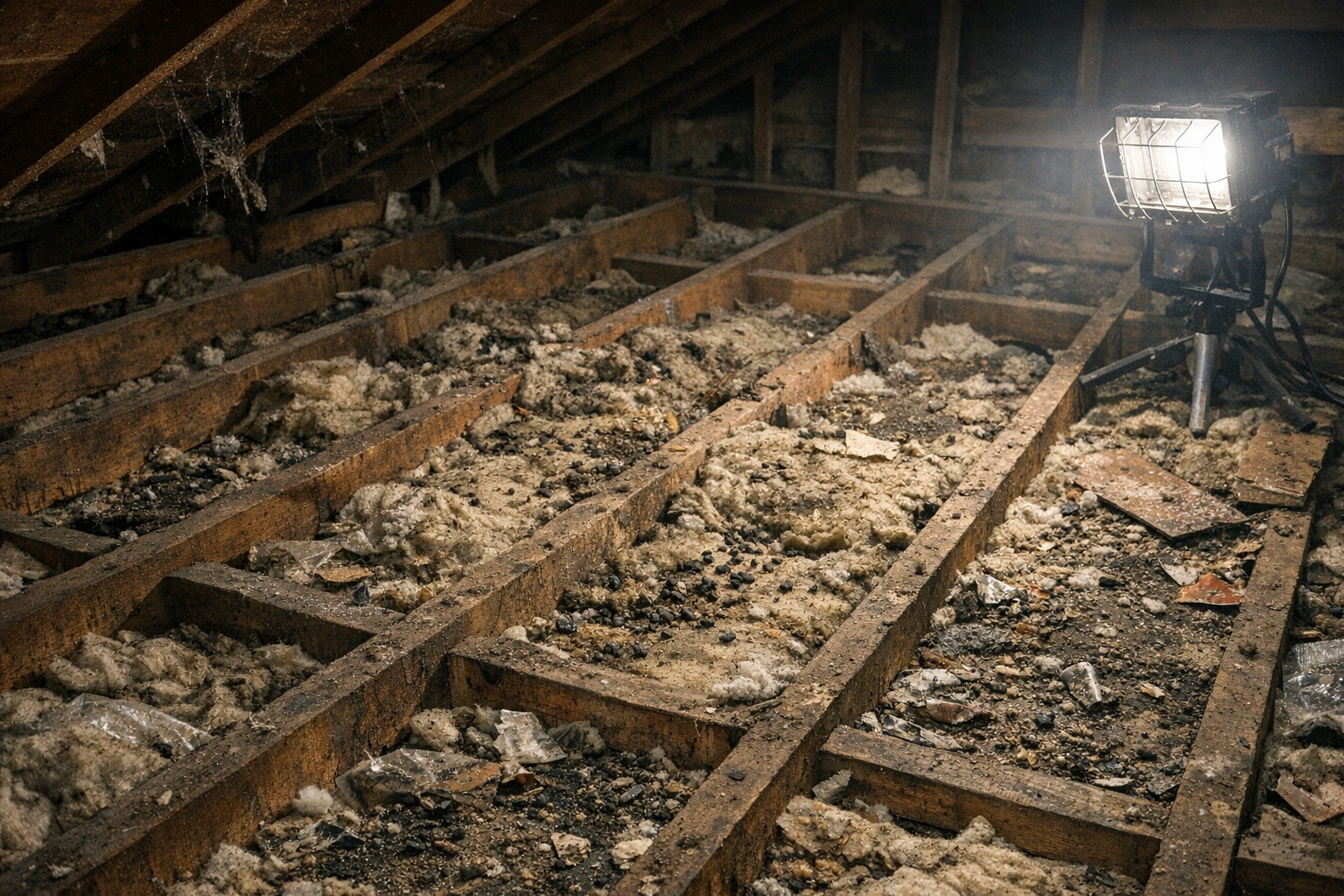
The damage wildlife does to a house is easy to photograph: torn soffits, chewed wires, flattened insulation. Harder to see — and more important for your family — is what an infestation does to the air you breathe. Your attic and wall voids aren't sealed off from your living space; they're connected to it by every ceiling penetration, duct run, and air leak in the house.
Here's how wildlife contamination reaches your indoor air, and what real remediation involves.
The Pathways: How Attic Contamination Becomes Room Air
Homes breathe through the 'stack effect': warm air rises and exits through the upper structure, drawing replacement air through gaps — and in winter, when systems reverse and pressures shift, attic air gets pulled down through recessed light fixtures, ceiling fan boxes, attic hatches, and top plates of walls. Whatever is in your attic's air participates in that exchange.
Ductwork makes it worse. Many Louisville homes run HVAC ducts through the attic; when animals tear open duct insulation or the ducts themselves — a favorite raccoon move — the system can pull contaminated attic air directly into supply airflow and deliver it to every room.
What's Actually in Contaminated Air
Ammonia and odor compounds from accumulated urine are the most noticeable — that musky smell on humid days is the sign that contamination is airborne. Beyond odor: dried droppings break down into particulate that can carry biological contaminants. Bat guano deserves specific respect, as it can support Histoplasma capsulatum, the fungus behind histoplasmosis — the Ohio River Valley is the textbook endemic region for it.
Add the secondary load: dander and shed fur, mites and bird/bat bugs from nesting material, and mold growing where urine has soaked insulation and roof leaks follow chewed openings. For household members with asthma or allergies, these exposures frequently show up as symptoms nobody connects to the attic.
Remediation That Actually Fixes the Air
Removing the animals is step one; the air doesn't improve until the source material is gone. Full remediation means removing contaminated insulation under controlled conditions (not dry-sweeping, which aerosolizes exactly what you're trying to eliminate), HEPA vacuuming of surfaces, enzymatic and antimicrobial treatment of framing and decking, and sealing the ceiling penetrations that connect attic to living space.
Duct runs that were damaged or exposed get inspected, repaired, and cleaned. Then new insulation goes in — most homeowners end up with better R-value than they started with.
If your house smells musky when the weather turns warm, or allergies mysteriously worsen indoors after a known infestation, the attic is the first suspect. Call (502) 200-9943 for an inspection that includes a contamination assessment.