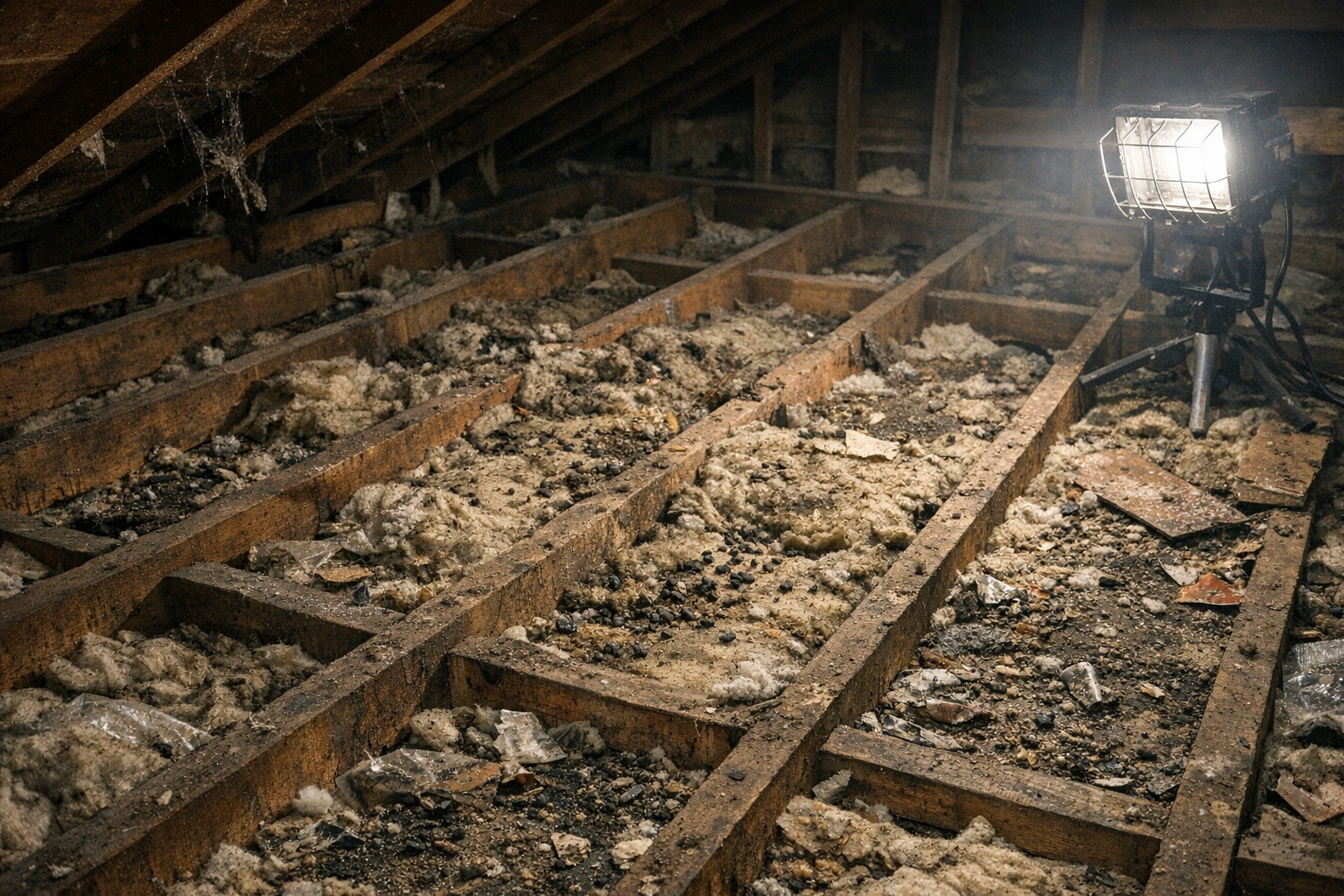
Of all the damage wildlife does to homes, chewed electrical wiring is the one that keeps fire investigators busy. Estimates from the fire-safety industry attribute a meaningful share of fires of 'unknown origin' to rodent and wildlife damage to wiring — damage that stays hidden in attics and wall voids until something arcs.
If you've had squirrels, raccoons, mice, or rats in your attic, assume the wiring needs to be looked at. Here's why the risk is real and what to do about it.
Why Animals Chew Wiring in the First Place
Rodents — squirrels, mice, and rats — have incisors that grow continuously throughout their lives. They must gnaw constantly to keep those teeth worn down, and the soft plastic insulation on electrical cable is an ideal gnawing surface. It's not that animals are attracted to electricity; your wiring is simply the most convenient chew toy in the attic.
Squirrels are the most destructive offenders in Louisville attics. A single squirrel can strip insulation from multiple runs of cable in a matter of weeks. Raccoons are less methodical chewers, but they tear at wiring while nesting and can pull cables loose from junction boxes.
How Chewed Wires Start Fires
Electrical cable is safe because its conductors are insulated from each other and from surrounding materials. When an animal strips that insulation, exposed copper can arc — either between conductors or to a grounded surface. An arc generates intense localized heat, and in an attic that heat has abundant fuel: dry wood framing, dust, paper-faced insulation, and nesting material the animals themselves piled against the wiring.
What makes this hazard uniquely dangerous is invisibility. A chewed wire may function normally for months. The damage sits in the attic where nobody looks, often buried under insulation, until the right combination of load, moisture, and contact sets it off. Warning signs — flickering lights, breakers that trip for no clear reason, warm outlets or switch plates, or a faint burning smell — deserve immediate attention if you've had any animal activity.
There's also an insurance angle worth knowing: while policies often exclude damage 'caused by rodents,' the resulting fire is generally a covered peril. Still, insurers scrutinize claims, and documented professional remediation after an infestation strengthens your position enormously.
What to Do After an Infestation
First, get the animals out and the entry points sealed — the chewing never stops while animals are present. Second, have the attic wiring inspected. As part of our attic restoration work, we visually inspect exposed wiring runs and photograph any damage we find; anything questionable gets referred to a licensed electrician before new insulation goes in. Never bury damaged wiring under fresh blown-in insulation.
Third, deal with the nesting material. Animal nests are tinder, and they're usually built in warm spots — which often means near wiring, junction boxes, or recessed light fixtures. Full removal of nests and contaminated insulation isn't just a sanitation step; it's a fire-safety step.
If you're hearing gnawing sounds, or you've recently had squirrels or raccoons removed and the wiring was never checked, call us at (502) 200-9943. We'll inspect the attic, document any electrical damage, and coordinate the cleanup so the problem is actually gone — not just quiet.