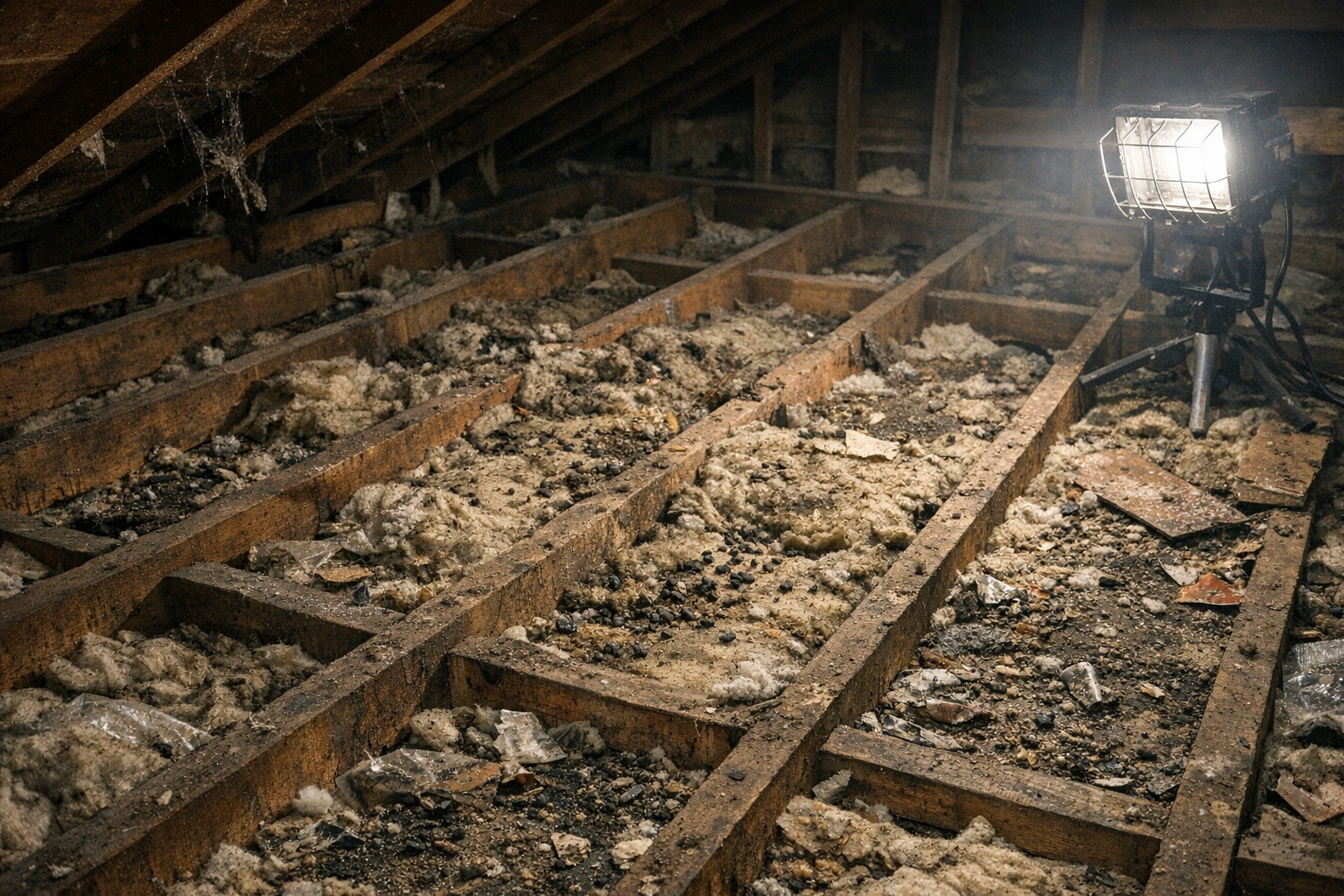
When homeowners discover they have wildlife in their attic, the first reaction is usually annoyance — the noise, the disruption, the hassle of dealing with it. But the reality is that wildlife in your attic represents a serious threat to your home's structural integrity, your family's health, and in some cases, your safety.
This isn't meant to alarm you unnecessarily. Most wildlife infestations, when caught and addressed promptly, don't result in catastrophic damage. But the longer an infestation goes unaddressed, the more serious the consequences become. Here's a clear-eyed look at what wildlife in your attic can actually do.
Electrical Fire Risk from Chewed Wiring
This is the danger that most people don't think about until it's too late. Squirrels, raccoons, and rats all chew on electrical wiring. For squirrels especially, chewing is a biological necessity — their teeth grow continuously, and they need to gnaw to keep them at a manageable length.
When an animal chews through the insulation on electrical wiring, it exposes bare copper wire. Bare wires in an attic, surrounded by insulation and other flammable materials, are a fire hazard. The National Fire Protection Association estimates that rodents are responsible for a significant percentage of house fires of unknown origin.
The insidious part is that chewed wiring in an attic can go undetected for months or years. You might not notice any electrical problems until a fire starts. This is one of the reasons why, after any wildlife infestation, a thorough inspection of the attic — including the wiring — is essential.
Disease Transmission Through Droppings and Urine
Wildlife droppings and urine in your attic don't just smell bad — they can make you sick. The specific risks depend on the species involved.
Raccoon roundworm (Baylisascaris procyonis) is found in raccoon feces and can cause serious neurological damage in humans and pets. The eggs can remain infectious in soil or insulation for years. Bat guano can harbor Histoplasma capsulatum, which causes histoplasmosis, a respiratory disease. Rodent droppings can carry hantavirus, though this is more of a concern in the western United States than in Kentucky.
The risk isn't just from direct contact. Disturbing dry droppings — even just walking through an attic — can release particles into the air that you then breathe in. If your HVAC system is in the attic or draws air from the attic, contaminated air can circulate through your entire home.
This is why professional cleanup and decontamination after a wildlife infestation is not optional — it's a health necessity.
Structural Damage to Insulation and Wood
Wildlife in your attic will damage your insulation. Raccoons tear it up for nesting material. Squirrels compress it and create runways through it. Bats contaminate it with guano. In all cases, the insulation's R-value — its ability to resist heat transfer — is compromised, which means higher energy bills.
Beyond insulation, animals can damage the structural wood of your attic. Raccoons and squirrels will chew on rafters, joists, and other structural members. Over time, this can compromise the structural integrity of your roof.
Water damage is another concern. When animals create or enlarge entry points in your roof, they create pathways for water intrusion. A small gap that a squirrel uses to enter can allow water to get in during rain, leading to rot, mold, and further structural damage.
The Compounding Effect of Delayed Action
Here's the thing about wildlife infestations: they don't stay the same size. A single raccoon becomes a mother with a litter of five. A pair of squirrels becomes a colony. The longer you wait, the more animals there are, the more damage they cause, and the more expensive the cleanup becomes.
We've seen attics where homeowners ignored the problem for a year or two. By the time they called us, the insulation was completely destroyed, the wiring had been chewed in multiple places, and the structural wood showed significant damage. What might have been a $500-$1,000 job became a $5,000-$10,000 restoration project.
If you're hearing noises in your attic, seeing signs of wildlife activity, or noticing unexplained odors, don't wait. Call a professional for an inspection. The cost of addressing the problem early is almost always a fraction of the cost of addressing it after significant damage has occurred.
At Wildlife Ridders, we offer same-day service in most cases. Call us at (502) 200-9943 and we'll assess your situation and give you an honest assessment of what needs to be done.