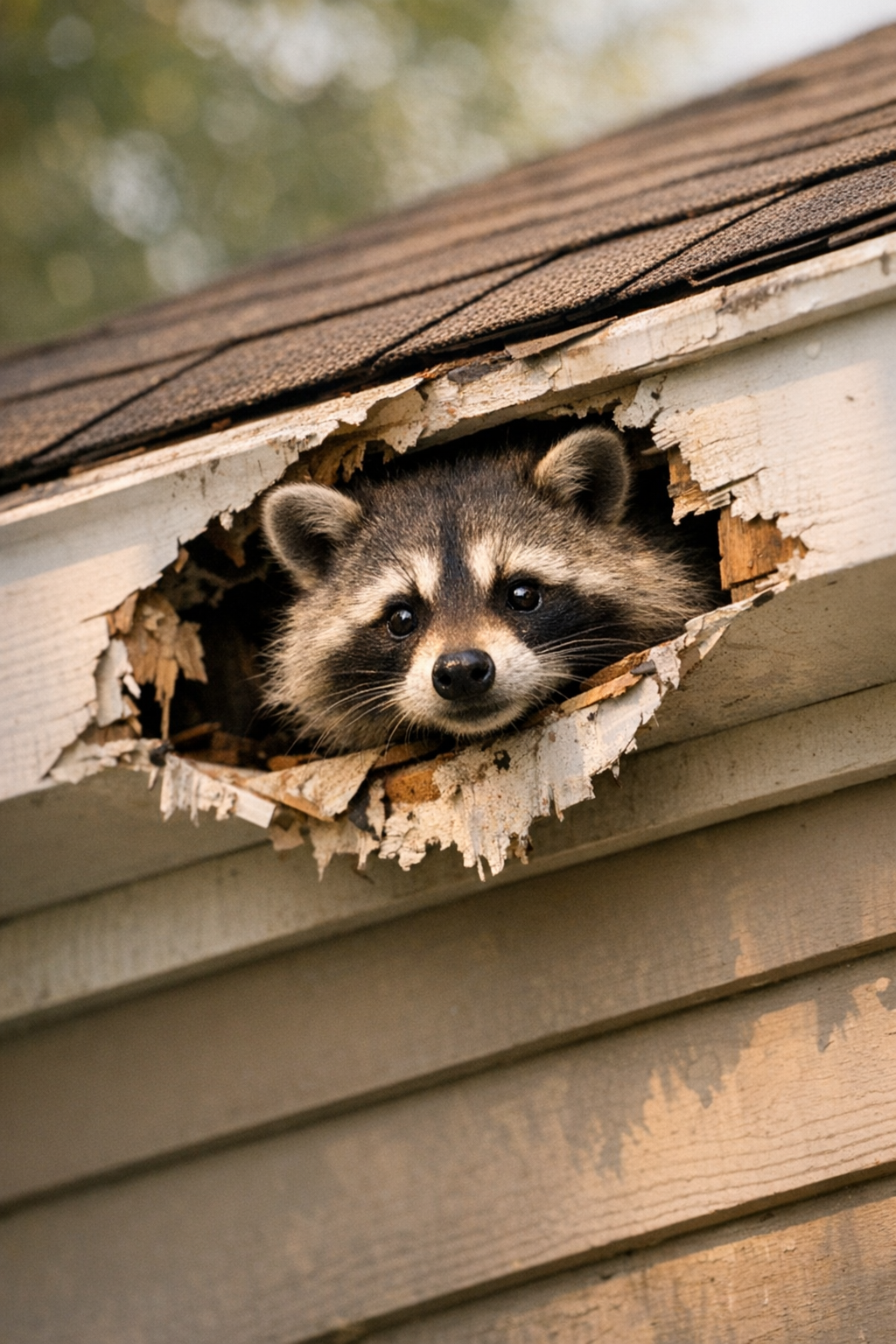
We understand the appeal: a live trap costs $60 at the hardware store, and a wildlife removal service costs more than that. But after years of being the second call — the one that comes after the DIY attempt — we can tell you exactly how these projects tend to go wrong, and why they usually end up costing more than professional removal would have.
This isn't about protecting our trade. Some wildlife jobs genuinely are simple. But the failures follow predictable patterns worth knowing before you buy that trap.
The Trap Catches the Wrong Thing — or the Right Thing at the Wrong Time
The most common DIY outcome is catching a neighbor's cat, an opossum that wasn't the problem, or a skunk you now have to deal with at close range. The second most common is catching a mother raccoon in June — leaving a litter of kits starving in your attic. They die in a wall void, and three weeks later you're paying for carcass location, removal, and odor remediation.
There's also a legal layer people don't expect: Kentucky and Indiana both regulate trapping and relocating wildlife. Relocating raccoons is restricted in both states due to rabies management, and bats are protected — handling them without training and proper authorization is both illegal and genuinely dangerous.
Repellents, Poisons, and Foam: The Money-Wasters
Mothballs, ammonia-soaked rags, ultrasonic plug-ins, coyote urine — homeowners try them all, and animals reliably ignore them. A raccoon that has established a den site with young will not abandon it because of a smell. Meanwhile mothballs in an attic off-gas naphthalene into your living space, which is a health issue for your family, not the raccoon.
Poison is worse. It's illegal for use on most wildlife species, and even where rodenticides are legal, a poisoned animal usually dies somewhere inaccessible. The odor of a decomposing squirrel in a wall cavity lasts weeks.
And foam sealant — the DIY favorite — is chewing practice for a squirrel. Raccoons pull it out in chunks. Any exclusion that isn't steel mesh, metal flashing, or masonry is temporary.
What the Professional Difference Actually Is
It isn't the trap — it's the process. Professional removal starts with identifying every entry point (not just the obvious one), confirming whether young are present, getting all animals out via one-way doors or hands-on removal, sealing with materials animals can't defeat, and remediating contamination. Skip any step and the problem comes back.
It's also the guarantee. Our exclusion repairs carry a lifetime no-entry warranty, which means a failed repair is our cost, not yours. No hardware-store trap comes with that.
If you're weighing a DIY attempt, at minimum get a professional inspection first — we'll tell you honestly what you're dealing with. Call (502) 200-9943.