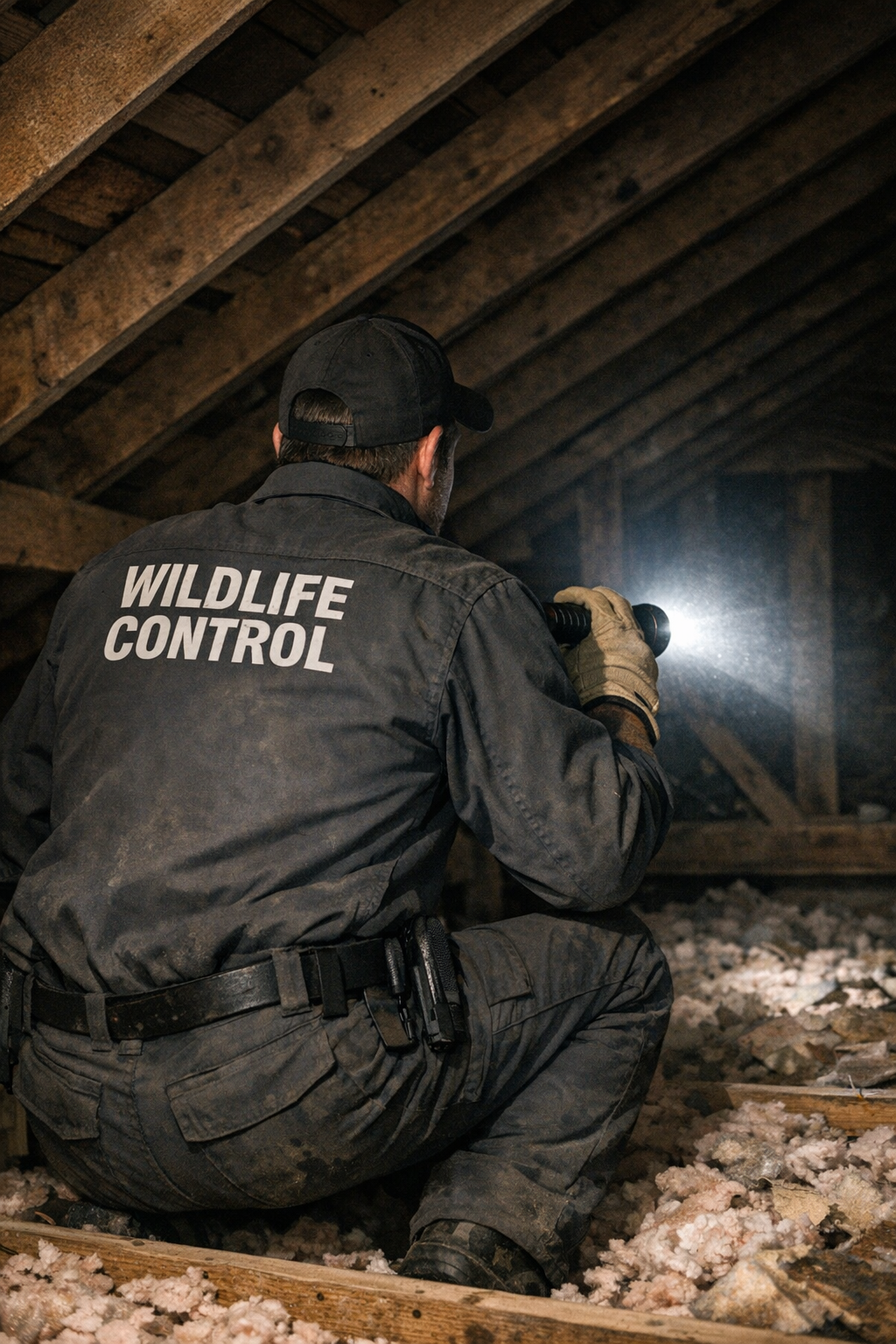
It usually starts with a smell — faint at first, unmistakable within a day or two. An animal has died somewhere in your house: a wall void, the attic, the crawl space, under the porch. It's one of the most unpleasant problems a homeowner faces, and the instinct to handle it fast can lead to mistakes.
Here's the safe, sane sequence for dealing with a dead animal in your home.
First: Don't Touch It Bare-Handed, and Don't Guess at the Source
If the animal is visible and accessible, resist the urge to grab it with a paper towel. Carcasses carry bacteria, parasites, and — depending on species — disease concerns that warrant gloves at minimum. Ticks and fleas also abandon a dead host quickly and go looking for a new one, which may be your pet or you.
If the animal isn't visible, resist the urge to start cutting drywall wherever the smell is strongest. Odor travels through wall voids and air handling systems, so the strongest smell is often several feet from the carcass. Professional location work reads airflow, fly activity, and staining — and opens the wall once, in the right place.
The Cleanup Is the Important Part
Removing the carcass is step one of three. Step two is treating the site: decomposition fluids soak into wood and insulation, and without enzymatic cleaning and disinfection the odor persists long after the animal is gone. Contaminated insulation generally needs to be removed and replaced.
Step three is odor neutralization for the airspace — in serious cases we treat rooms to break down odor compounds rather than mask them. Skipping steps two and three is why DIY dead-animal jobs so often result in a smell that fades but returns on every humid day.
One more critical point: never spray air freshener into your HVAC returns or vents to fight the smell. If the animal died in or near ductwork, the system needs to be inspected and cleaned, not perfumed.
The Question That Prevents a Repeat
A dead animal in your house is evidence of a live-animal pathway into your house. How did it get in — and is anything else using the same route? A mouse that died in a wall implies a rodent entry point; a squirrel that died in a chimney implies an uncapped flue; a raccoon under the porch implies an open crawl space.
Every dead animal call we run ends with an entry-point inspection, because removing the carcass without closing the pathway just schedules the next one.
We handle dead animal location, removal, disinfection, and odor treatment across Louisville and Southern Indiana — same-day in most cases, because we know you can't wait. Call (502) 200-9943.