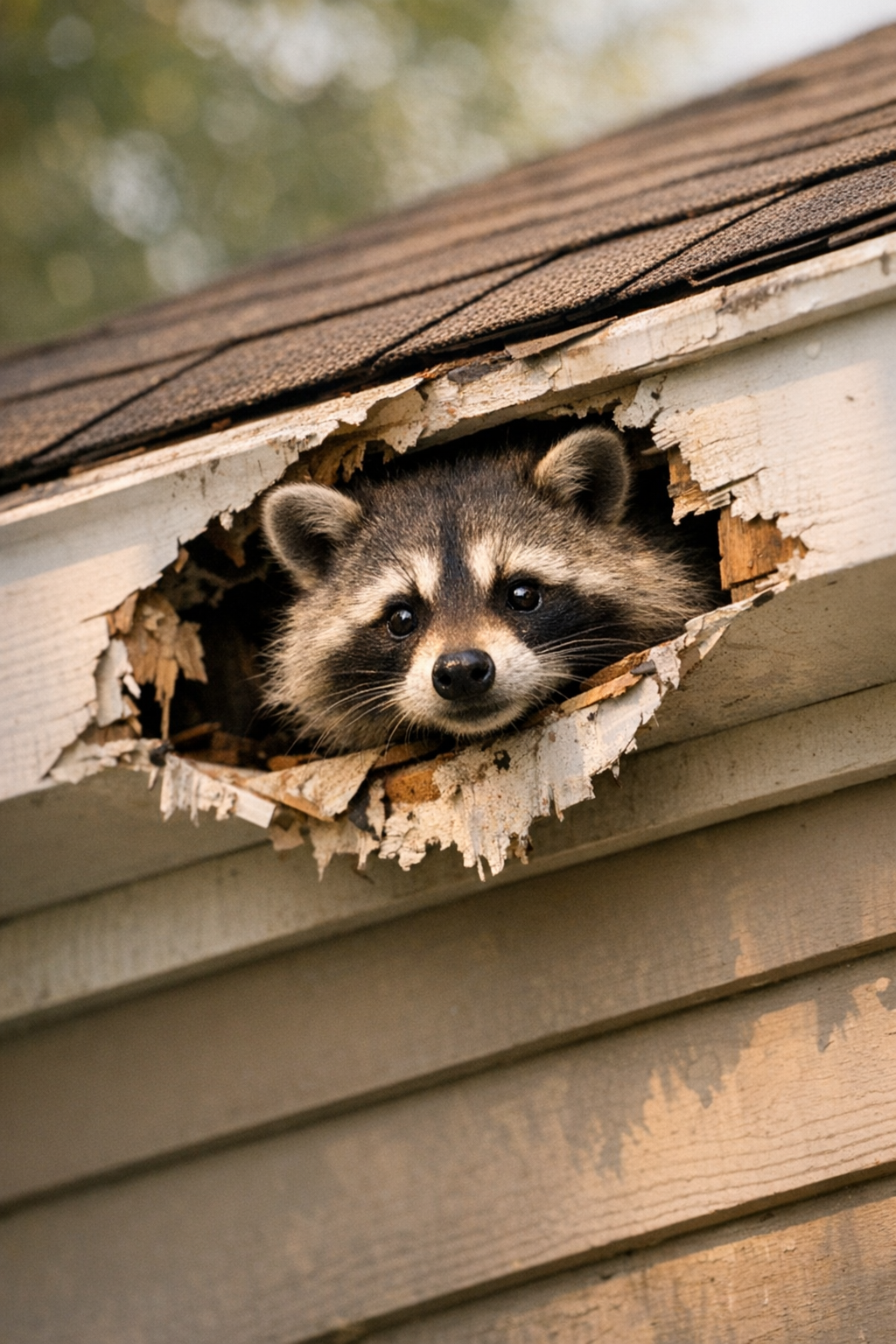
From March through early summer, the majority of animals we remove from Louisville attics aren't loners looking for shelter — they're mothers raising young. Baby season changes everything about how wildlife removal has to be done, and it's where inexperienced or rushed work causes the most harm.
Here's what homeowners should understand about the season, the timing, and why the right removal approach protects both your house and the animals.
The Baby Season Calendar in Kentucky
Raccoons: kits are born March through May, typically litters of three to five, dependent on the mother for roughly eight weeks. Squirrels run two litters — late winter (February–March) and late summer (August–September). Bats have pups in June and July, and the maternity colony period restricts exclusion work by regulation. Skunks and opossums raise young from May onward; groundhogs from April through June.
The practical meaning: for most of the spring and summer, an animal in your attic, chimney, or under your deck should be presumed to be a mother with young until an inspection proves otherwise.
Why Babies Change the Removal Plan
Young animals can't leave through a one-way door — for weeks they're immobile, hidden in insulation or deep in wall voids. Trap or exclude the mother, and the litter dies inside the structure. That's inhumane, and it's also a homeowner disaster: a desperate mother will tear through roofing or soffit to get back in, and if she can't, you'll have carcasses in inaccessible spaces.
The professional approach depends on age. When young are mobile, one-way doors let the whole family leave together. When they're not, we remove kits by hand and stage them in a heated reunion box outside the entry point — mothers reliably retrieve and relocate their young overnight to a backup den. It's slower and more careful than just setting a trap, and it's the difference between solving the problem and creating two new ones.
What Homeowners Should (and Shouldn't) Do in Spring
Do call promptly when you hear activity — crying, chittering, or persistent noise in one spot is the classic mother-and-litter sound, and earlier intervention means more options. Do schedule preventive sealing in fall or winter, outside the season entirely.
Don't seal any opening between March and August without a confirmed-empty inspection. Don't use one-way doors on your own during this window. And if you find a baby raccoon or squirrel on the ground, give the mother a chance to retrieve it before intervening — she usually will.
We handle baby-season removals every week of every spring, humanely and with the repairs to make it permanent. Call (502) 200-9943 to schedule an inspection.