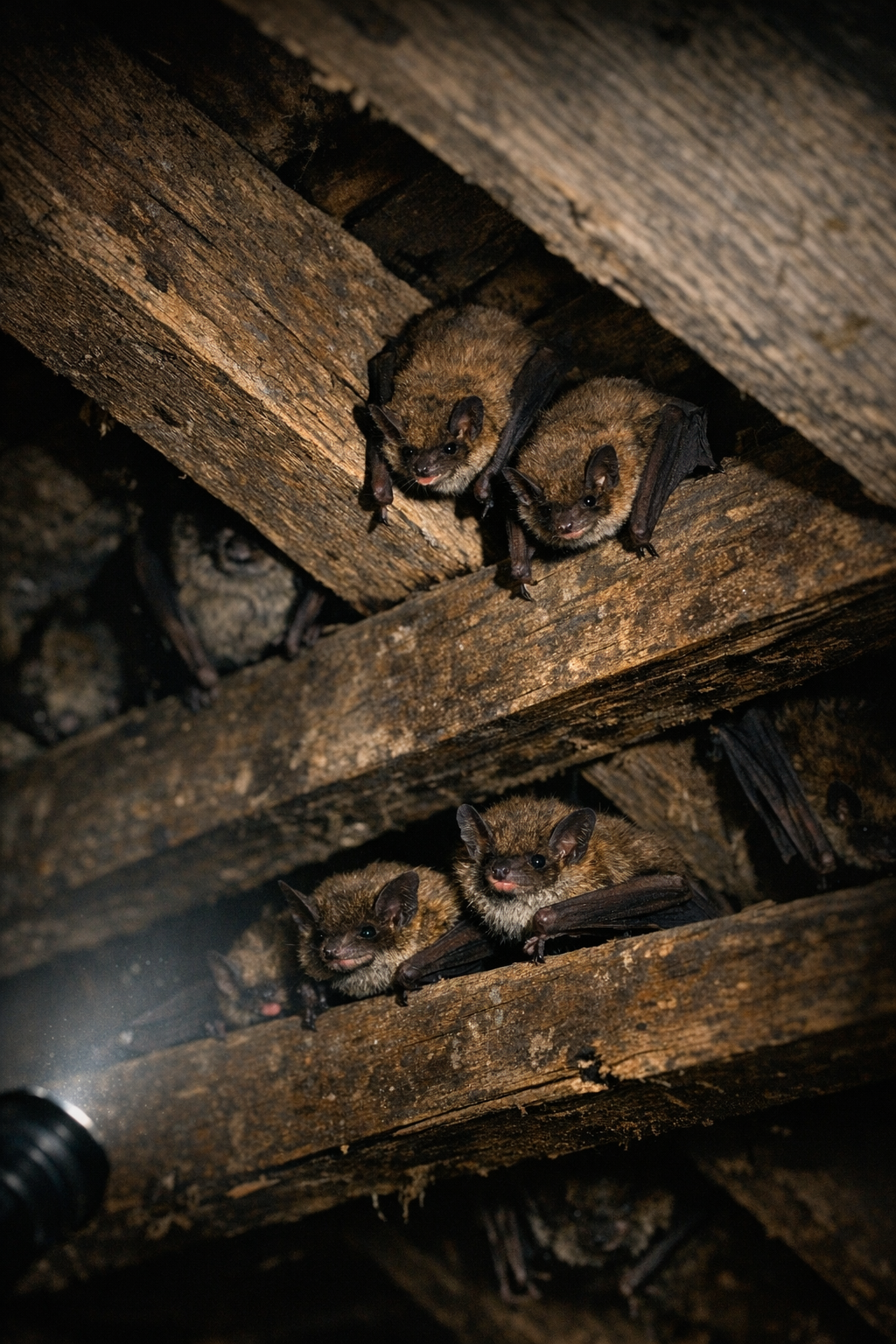
Bats are fascinating animals. A single little brown bat can eat up to 1,000 mosquitoes in an hour, and a colony of big brown bats — the most common species we deal with in Louisville — can consume millions of insects over the course of a summer. They're genuinely beneficial to the ecosystem.
But when a colony of bats decides your attic is a good place to roost, the situation becomes a serious problem that requires professional attention. This isn't just about the noise or the smell, though both can be significant. There are legal, health, and practical reasons why bat removal is one of the most specialized services in the wildlife control industry.
Here's what you need to know about why bat removal requires a professional — and what the process actually looks like.
Bats Are Legally Protected
This is the first thing people are often surprised to learn. In Kentucky and Indiana, bats are protected under state wildlife laws, and several species — including the Indiana bat and the northern long-eared bat — are federally protected under the Endangered Species Act.
What this means practically is that you cannot simply exterminate a bat colony. Killing bats is illegal and can result in significant fines. The only legal method of bat removal is exclusion — allowing the bats to leave on their own through one-way devices while preventing them from re-entering.
There are also seasonal restrictions. In Kentucky, bat exclusion is generally prohibited during the maternity season, which runs from approximately May 1 through August 15. During this period, young bats (called pups) are flightless and cannot leave the roost on their own. Excluding the adults during this time would trap the pups inside, where they would die — which is both inhumane and illegal.
A licensed wildlife professional knows these regulations and will time the exclusion appropriately. Attempting DIY bat removal without this knowledge can put you on the wrong side of federal law.
The Rabies Risk Is Real
Bats are the primary vector for rabies in the United States. While the percentage of bats that actually carry rabies is relatively low — studies suggest around 1-2% of wild bats — the consequences of exposure are severe enough that any potential contact needs to be taken seriously.
The tricky part is that bat bites are often not felt. Bat teeth are very small, and a bite can occur during sleep without the person waking up. If you wake up and find a bat in your bedroom, or if a bat has been in a room with a sleeping person, a child, or a pet, you should contact your local health department immediately.
Handling bats without proper protective equipment — thick leather gloves at minimum — is not something homeowners should attempt. A professional wildlife technician has the training and equipment to handle bats safely.
Guano Accumulation Is a Health Hazard
A colony of bats produces a significant amount of guano (droppings) over time. In a large or long-established colony, guano can accumulate several inches deep in an attic. Beyond the obvious unpleasantness, bat guano can harbor Histoplasma capsulatum, a fungus that causes histoplasmosis — a respiratory disease that can be serious in people with compromised immune systems.
Disturbing dry guano releases spores into the air. Cleanup requires proper respiratory protection (N95 masks at minimum, often full respirators), protective clothing, and proper disposal. This is not a job for a shop vac and a dust mask.
After a bat colony is excluded, a thorough cleanup and decontamination of the affected area is essential — both for health reasons and to eliminate the pheromone scent that can attract new bats to the same location in future years.
What Professional Bat Exclusion Looks Like
The exclusion process starts with a thorough inspection of the exterior of your home, typically at dusk when bats are emerging to feed. This allows us to identify exactly where the colony is entering and exiting. Bats can squeeze through gaps as small as 3/8 of an inch, so the inspection needs to be meticulous.
Once all entry points are identified, we install one-way exclusion devices — typically tubes or netting — over the primary entry points. These allow bats to exit but prevent them from re-entering. Secondary entry points are sealed permanently.
After the bats have vacated (which typically takes a few days to a couple of weeks depending on the size of the colony and the time of year), the exclusion devices are removed and the primary entry points are sealed with appropriate materials.
The final step is cleanup and decontamination of the affected area. This is where the real work often is — removing contaminated insulation, sanitizing surfaces, and treating the area to eliminate odors and pathogens.
If you're hearing scratching or squeaking in your walls or attic, or if you've seen bats entering or exiting your home at dusk, call us at (502) 200-9943. We'll do a thorough inspection and walk you through the process and timeline for your specific situation.