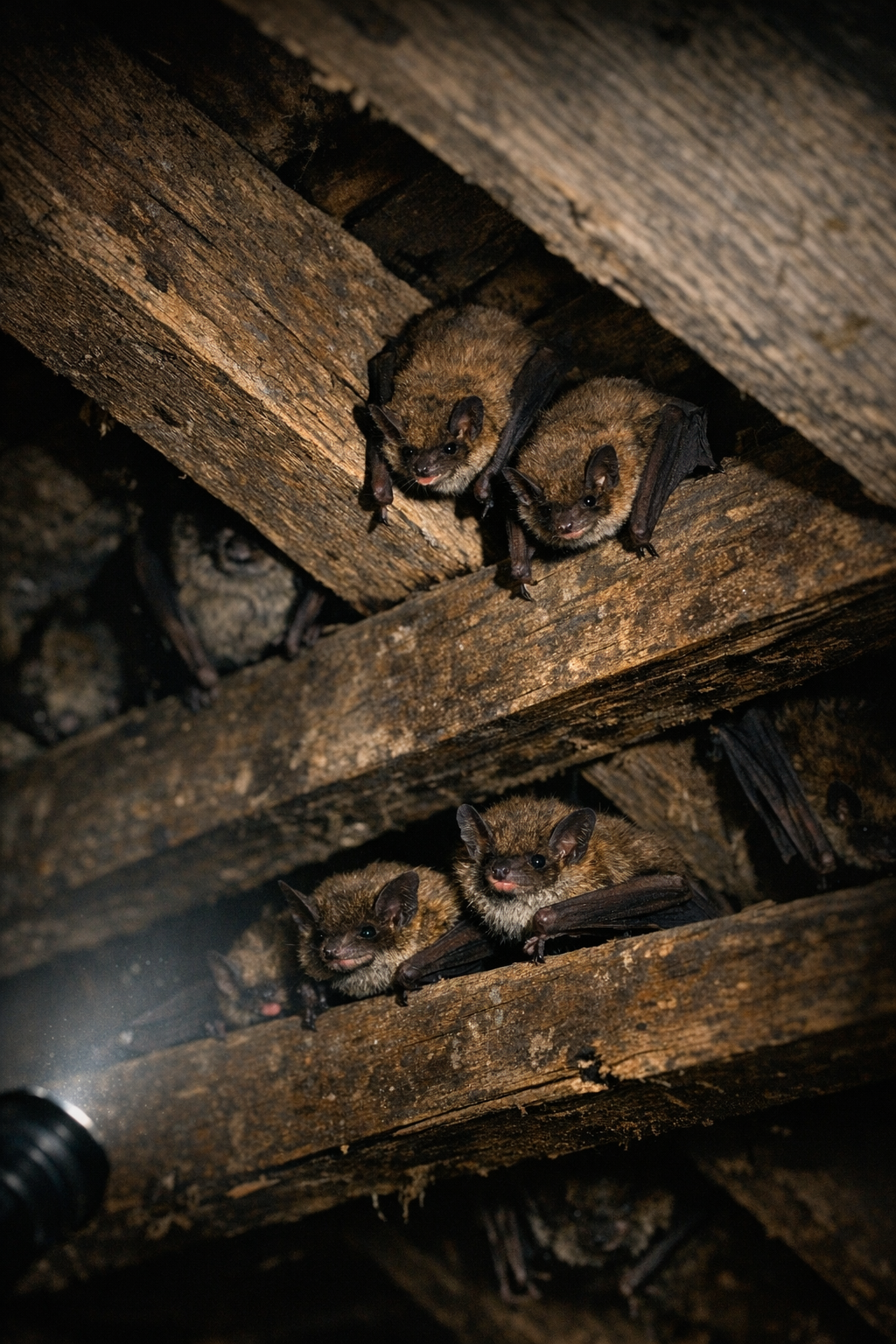
Getting bats out of an attic is a well-defined process. Keeping them out is the part that separates a permanent solution from an annual ritual — because bats are extraordinarily loyal to roost sites. A colony excluded in August will be back at your roofline next spring, testing every gap, sometimes for years.
Here's what long-term bat-proofing actually requires.
Why Bats Keep Coming Back
Bats exhibit strong site fidelity: females return to the same maternity roost year after year, and they navigate back to your specific attic from winter hibernation sites many miles away. Your house also advertises itself — years of use leave scent marking and guano staining at entry points that read as 'vacancy' to any bat investigating.
They also need almost nothing to get in. A big brown bat fits through a gap of three-eighths of an inch — the thickness of a pencil. That's a warped piece of flashing, a shrunken bead of caulk, a gap where the chimney meets siding. Sealing the two holes the colony used last year while leaving six candidate gaps is a one-year fix.
The Full-Perimeter Standard
Professional bat-proofing seals the entire envelope of the upper structure, not just known entries: ridge caps and ridge vent ends, all flashing junctions, gable vents (screened with 1/4-inch hardware cloth from inside), soffit gaps and rake boards, chimney-to-wall junctions, and louver and utility penetrations. On an older Louisville home this is commonly forty or more individual seal points.
Materials matter less for strength than for longevity here — bats don't chew — so the enemy is material shrinkage and movement. High-grade sealants, backer rod for larger joints, and mechanical (screwed or nailed) metal or mesh closures outlast caulk-only work by a decade.
Timing is regulated: exclusion can't be done during the maternity season (roughly June through mid-August in Kentucky) when flightless pups are in the roost. The professional calendar is spring or late summer through fall, using one-way exclusion devices, then final sealing after the roost is confirmed empty.
Maintenance and the Long Game
After exclusion, an annual check keeps you ahead: walk the exterior at dusk in July and watch your roofline for fifteen minutes — bats emerging are unmistakable. Inspect seal points every couple of years for shrinkage, especially after roof work (roofers reliably reopen bat entries and don't know it).
Also address the attractant history: if guano wasn't fully removed and the attic deodorized during cleanup, the scent beacon remains. Full guano remediation is part of any bat job we do, both for health reasons and for prevention.
Our bat exclusion work is backed by our lifetime no-entry guarantee — if bats get back in through anything we sealed, we fix it free. Call (502) 200-9943 for an assessment.