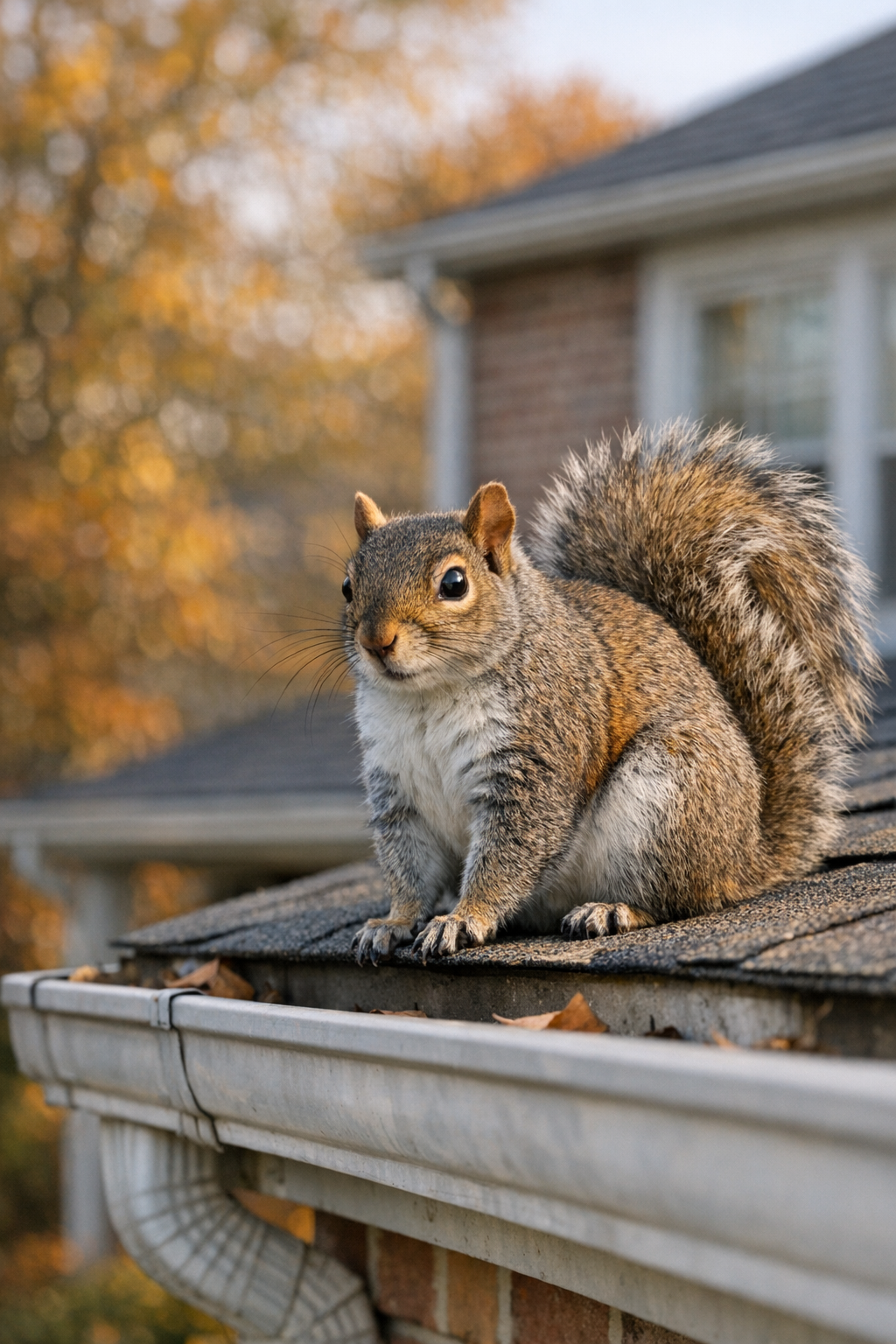
Squirrels are everywhere in Louisville. They're in the parks, in the trees lining every residential street, and — more often than homeowners would like — in attics, crawlspaces, and walls. They're clever, persistent, and surprisingly destructive for an animal that weighs less than a pound.
The good news is that squirrel problems are largely preventable. Unlike some wildlife issues that seem to come out of nowhere, squirrel infestations usually follow a predictable pattern, and there are concrete steps you can take to make your home much less attractive to them.
Here's what you need to know about preventing squirrel damage before it starts — and what to do if they've already gotten in.
Trim Tree Branches Away from Your Roofline
This is the single most effective thing most homeowners can do to reduce squirrel access to their roof. Squirrels are excellent jumpers — they can leap horizontally up to 10 feet — but they still prefer to use branches as highways to your roofline.
The general rule is to keep branches trimmed back at least 8-10 feet from your roof. This includes branches that hang over the roof, not just ones that touch it. A squirrel can easily jump from a branch that's several feet away.
Pay particular attention to trees near your chimney, dormers, and any areas where the roofline has gaps or weak points. These are the spots squirrels will target once they're on the roof.
Seal Gaps and Vulnerable Entry Points
Squirrels can squeeze through a gap about the size of a golf ball — roughly 1.5 inches in diameter. They're also persistent chewers, so a small gap can quickly become a large one if a squirrel decides it wants in.
Common entry points include gaps where the roofline meets the fascia board, deteriorated or missing soffit panels, roof vents with damaged or missing screens, gaps around pipes and utility lines where they enter the house, and the junction between the chimney and the roof.
Walk around your home and look for any gaps, cracks, or deteriorated areas in the exterior. Pay special attention to the roofline and any areas where different materials meet. If you find gaps, seal them with appropriate materials — hardware cloth (1/4 inch mesh) is effective for larger gaps, and steel wool combined with caulk works well for smaller ones.
Avoid using foam sealant alone. Squirrels can chew through foam easily. Any repair that's meant to keep squirrels out needs to incorporate metal or other materials they can't gnaw through.
Install Squirrel Guards on Utility Lines and Downspouts
Squirrels often use utility lines as pathways to your home. While you can't remove the lines, you can install cylindrical plastic guards (sometimes called squirrel baffles) on the lines near your house. These spin when a squirrel tries to walk across them, preventing access.
Downspouts are another common access route. Squirrels will climb straight up a downspout to reach the roof. Metal downspout guards or wrapping the lower portion of downspouts with a smooth metal sleeve can help deter this.
Manage Food Sources Around Your Property
Bird feeders are a major attractant for squirrels. If you have bird feeders, use squirrel-proof designs and place them on poles with baffles rather than hanging them from trees or structures near your home. The goal isn't necessarily to eliminate bird feeding — it's to keep the feeding activity away from your house.
Fallen fruit from trees, unsecured compost bins, and accessible trash cans can also attract squirrels and other wildlife. Keeping your yard clean and food sources secured reduces the overall wildlife pressure on your property.
Pet food left outside is another common attractant. If you feed pets outdoors, bring the bowls in when your pets are done eating.
What to Do If Squirrels Are Already Inside
If you're hearing scratching, chewing, or scurrying sounds in your attic or walls — especially in the early morning or late afternoon when squirrels are most active — there's a good chance they're already inside.
The most important thing is not to seal entry points without first confirming the animals are out. Trapping squirrels inside your walls or attic creates a much worse problem. They'll chew frantically trying to escape, potentially causing significant damage, and if they die inside, the odor can be severe.
A professional wildlife removal company will use one-way exclusion devices to allow squirrels to exit while preventing re-entry, then seal all entry points once the animals are confirmed out. At Wildlife Ridders, we back all exclusion work with a lifetime no-entry guarantee.
If you're dealing with squirrels in your home or want a professional assessment of your home's vulnerability, call us at (502) 200-9943. We offer same-day service in most cases.