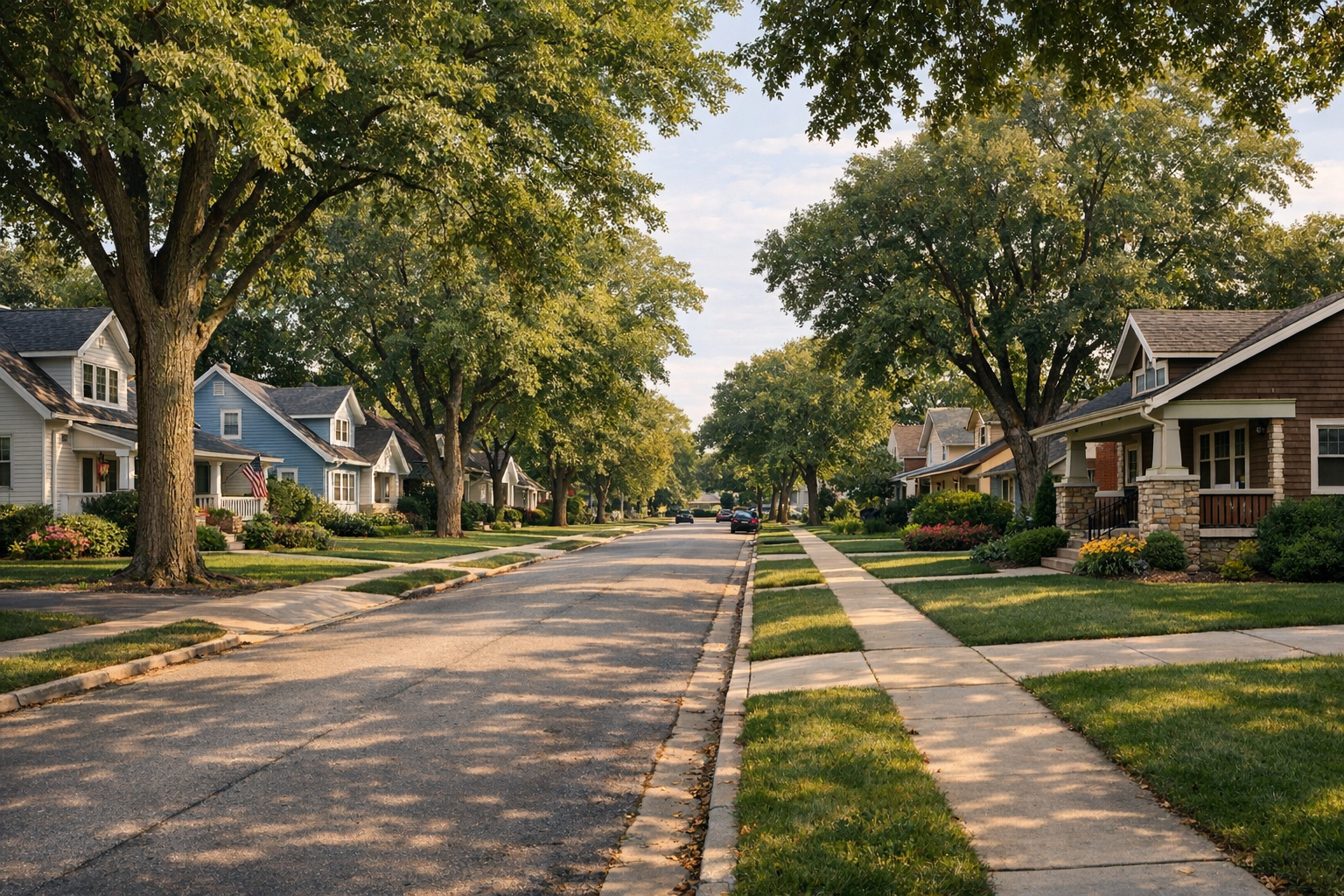
Wildlife Control in Forest Hills
Professional animal removal and long-term exclusion for forest-edge homes in the Jeffersontown area — deer, raccoons, foxes, squirrels, and bats.
Wildlife Removal for Forest Hills Homeowners
Forest Hills is a small, wooded community in the Jeffersontown area where homes often back up to trees, creeks, or greenbelts. The larger lots, mature landscaping, and quiet streets make it a desirable place to live — but the proximity to natural areas also means that wildlife is a constant presence. In Forest Hills, the question isn't whether you'll encounter wildlife; it's how you'll manage it when you do.
Deer are one of the most visible wildlife issues in Forest Hills. They browse in yards, gardens, and landscaping along the wooded edges of the neighborhood, and they can cause significant damage to shrubs, trees, and plantings near the tree line. While deer themselves don't typically enter homes, their presence near your property can attract other predators — coyotes and foxes follow deer, and where there are deer, there's often a broader wildlife ecosystem at work.
Raccoons and foxes are the most common structural problem animals in Forest Hills. They move through the wooded corridors and backyards of the neighborhood, looking for food and den sites. Raccoons are particularly bold in wooded neighborhoods — they become comfortable near patios and decks, and they're strong enough to tear open weak spots in your home's exterior when they decide they want to get inside. Foxes are less likely to enter homes but can den under decks, sheds, and in crawl spaces.
Squirrels and bats take advantage of the mature trees and older rooflines that are common in Forest Hills. Squirrels use overhanging branches to access rooftops, and they're persistent about finding or creating entry points into attics. Bats are attracted to the insect populations that thrive near wooded areas, and they roost in attics, gables, and behind shutters. The mature tree canopy in Forest Hills can also mask small entry points on roofs and upper walls that would be more visible on a less-shaded property.
Common Wildlife Problems in Forest Hills
Forest-edge properties in Forest Hills face a unique combination of wildlife challenges from both the woods and the surrounding neighborhood.
Deer
Deer browse in yards, gardens, and landscaping along the wooded edges of Forest Hills. They can cause significant damage to shrubs, trees, and plantings near the tree line — and their presence can attract other predators to the area.
View Details →Raccoons & Foxes
Raccoons and foxes move through the wooded corridors and backyards of Forest Hills, looking for food and den sites. They're often seen at night near fences, decks, and edge-of-woods areas — and they can become bold enough to approach homes regularly.
View Details →Squirrels & Bats
Squirrels and bats take advantage of the mature trees and older rooflines of Forest Hills to access attics and soffits. The dense tree canopy can mask entry points that would be more visible on less-shaded properties.
View Details →Living on the Forest Edge
Forest-edge properties like those in Forest Hills occupy a unique ecological position. They're at the boundary between developed suburban areas and natural woodland — and that boundary is exactly where wildlife activity is most intense. Animals from the woods venture into the neighborhood in search of food, water, and shelter, while suburban animals like raccoons and squirrels use the woods as cover and a travel corridor.
This means that Forest Hills homeowners often deal with a wider variety of wildlife than residents of more urban neighborhoods. You might have squirrels in your attic, raccoons under your deck, deer in your garden, and foxes denning in your crawl space — all at the same time. Managing this requires a comprehensive approach that addresses each problem individually while also thinking about the property as a whole.
Our approach in Forest Hills starts with a thorough inspection of the entire property — not just the obvious problem areas. We look at the roofline, the foundation, the crawl space, the deck, the shed, and the yard. We identify all active wildlife activity and all potential entry points. Then we develop a plan that addresses everything, so you're not just solving today's problem while tomorrow's problem is already developing.
Neighborhood Characteristics
- ✓Small, wooded community with larger lots and mature landscaping
- ✓Homes often backing up to trees, creeks, or greenbelts
- ✓Quiet streets with a natural, tucked-away feel
- ✓Wildlife corridors connecting wooded areas and nearby neighborhoods
Wildlife Risk Factors
- !Forest edges give wildlife a natural staging area right behind homes
- !Mature trees and shade can mask entry points on roofs and upper walls
- !Deer, raccoons, and foxes may become comfortable near patios and decks
- !Wooded corridors allow wildlife to move freely between properties
Frequently Asked Questions
Can you help with deer damage to my landscaping?
We can assess the situation and recommend deterrent strategies. While we don't trap or relocate deer, we can help you understand the patterns and implement solutions that reduce deer pressure on your property.
How do I know if a fox is denning under my deck?
Signs include a strong musky odor, fur or food scraps near the opening, and tracks in soft soil. You may also hear vocalizations at night. We can inspect and confirm, then develop a plan to safely evict the fox and prevent re-entry.
Is bat removal different from other wildlife removal?
Yes. Bats are protected by law and cannot be trapped or killed. Removal must be done through exclusion — installing one-way devices that allow bats to leave but not return. This must be done outside of maternity season (June–August). We're fully licensed for bat work.
How quickly can you respond in Forest Hills?
We're in the Jeffersontown area regularly and can typically provide same-day or next-day service. For urgent situations, we prioritize fast response.
Need Wildlife Help in Forest Hills?
Living near the woods is wonderful — until the wildlife moves in. Call us today for a comprehensive inspection and a clear plan.
Serving Forest Hills and all of Jeffersontown · Licensed & Insured · Humane Wildlife Removal