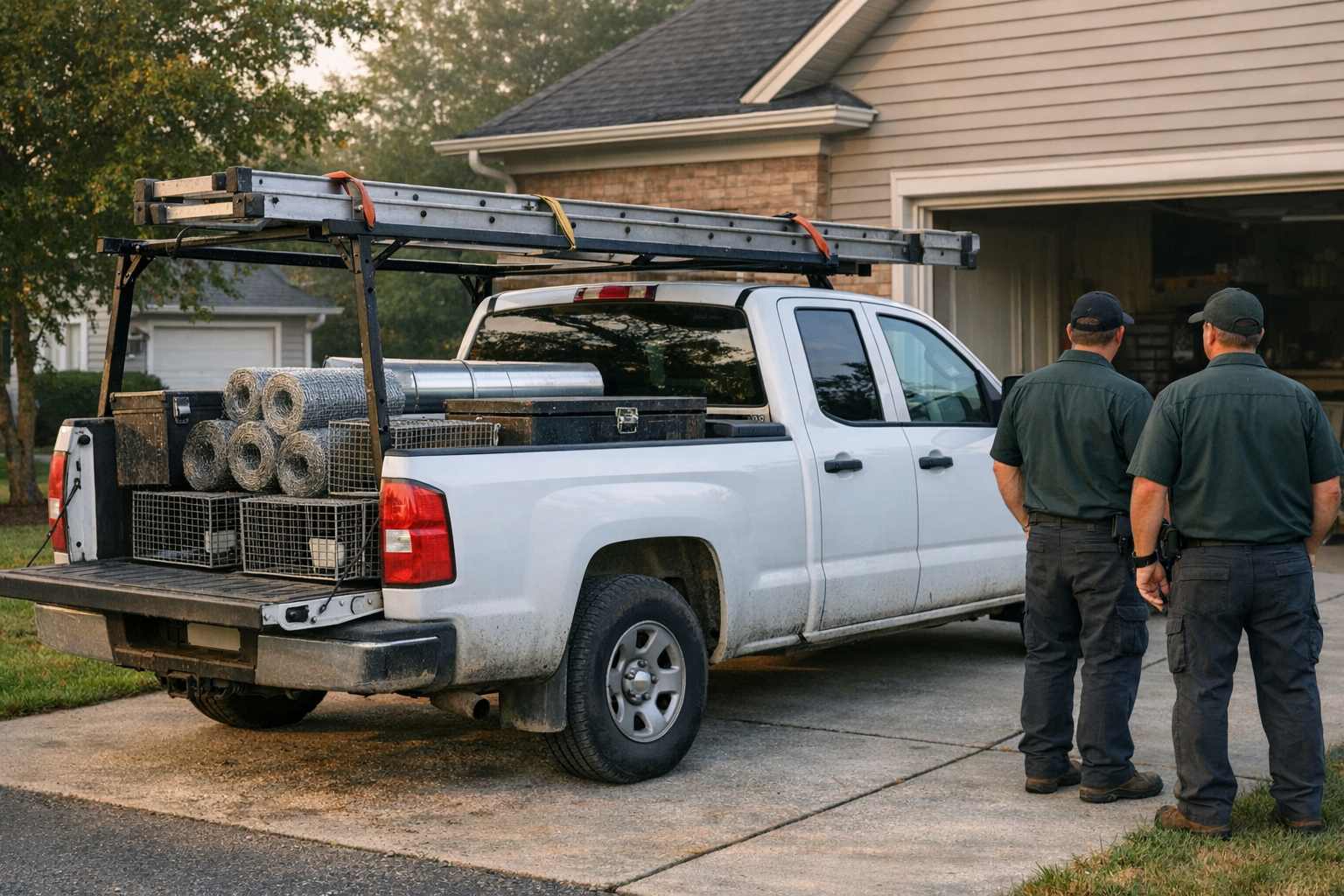
A wildlife inspection appointment is short — usually under an hour — and the questions you ask during it determine how much value you walk away with. Good technicians welcome sharp questions; evasive answers to any of these are themselves useful information.
Here's what to ask, and what a solid answer sounds like.
Questions About the Diagnosis
"What animal is it, and what's your evidence?" — The answer should reference specific evidence: droppings, tracks, chew patterns, entry hole size, sounds. 'Probably raccoons' with no evidence chain is a guess, and guesses produce wrong removal plans.
"How many entry points did you find — and can you show me each one?" — This is the single most revealing question. Incomplete entry-point identification is the number-one cause of failed wildlife jobs. A good tech shows you photos of every opening, including the secondary ones that aren't currently active.
"Are there babies?" — From March through August this question is mandatory. The answer determines the entire removal method, and a technician who hasn't checked hasn't finished inspecting.
Questions About the Work
"What removal method will you use, and why that one?" — Listen for method matched to species and season: one-way doors for squirrels and bats, reunion protocols for litters, trapping where appropriate and lawful. 'We'll just set some traps' for every situation is a red flag, and any mention of poison for wildlife is a disqualifier.
"What materials will you seal with?" — The right answers are steel: hardware cloth, metal flashing, mortar. If foam or caulk is the primary sealing plan for anything a rodent can reach, the repair has a countdown timer.
"Does the quote include cleanup and repairs, or just removal?" — Get the scope in writing with pricing per component. Removal-only quotes look cheaper until the contamination and repair costs arrive as change orders.
Questions About Accountability
"What's your guarantee, exactly?" — 'Guaranteed' means nothing without terms. Ask what's covered, for how long, and what voids it. (Ours: lifetime no-entry guarantee on every opening we seal — if an animal gets back in through our work, the fix is free.)
"Are you licensed and insured for this work in this state?" — Kentucky and Indiana both regulate nuisance wildlife control; yes should come with specifics, and insurance matters because this work happens on your roof.
Take notes, keep the photos, and trust your read of the answers. If you want to hear how we answer all of the above, call (502) 200-9943 and put us to the test.