When most people think about wildlife removal, they think about getting the animals out. And that's certainly the first step. But for many homeowners, the work that comes after the animals are gone is just as important — and often more expensive.
Attic restoration is the process of cleaning, decontaminating, and restoring your attic to a safe, functional condition after a wildlife infestation. Here's what's typically involved and why it matters.
Why Attic Restoration Is Necessary
Animals living in your attic leave behind more than just memories. Raccoons, squirrels, bats, and other wildlife contaminate insulation with urine, feces, and nesting material. Over time, this contamination creates health risks, odor problems, and reduced energy efficiency.
Raccoon roundworm eggs in raccoon feces can remain infectious for years. Bat guano can harbor Histoplasma capsulatum, which causes histoplasmosis. Even without specific pathogens, the ammonia from accumulated urine can cause respiratory irritation and is unpleasant to live with.
Beyond health concerns, contaminated insulation loses its effectiveness. Insulation that's been compressed, torn apart, or soaked with urine doesn't insulate as well as it should, which means higher heating and cooling costs.
Finally, the pheromone scents left by animals can attract new wildlife to the same location. If you don't clean up after removing the animals, you're essentially leaving a welcome sign for the next batch.
Step 1: Removing Contaminated Insulation
The first step in attic restoration is removing the contaminated insulation. This is done using commercial-grade vacuum equipment with HEPA filtration to prevent contaminated particles from being released into the living space.
The amount of insulation that needs to be removed depends on the extent of the contamination. In some cases, only the areas directly affected by animal activity need to be removed. In more severe infestations, the entire attic may need to be cleared.
This work requires proper protective equipment — respirators, Tyvek suits, and gloves — to protect the technicians from exposure to pathogens and allergens. It's not a job for a homeowner with a dust mask and a shop vac.
Step 2: Sanitization and Decontamination
After the contaminated material is removed, the attic surfaces — wood framing, sheathing, and any remaining materials — are treated with an enzyme-based cleaner and disinfectant. This breaks down organic material and kills pathogens.
In cases where bat guano is present, the treatment process is more intensive. Guano can be difficult to remove completely from rough wood surfaces, and the fungal spores it can harbor require thorough treatment.
The goal of this step is to eliminate both the health risks and the odors that can attract new wildlife. A properly decontaminated attic should have no detectable animal odor.
Step 3: Re-Insulation and Restoration
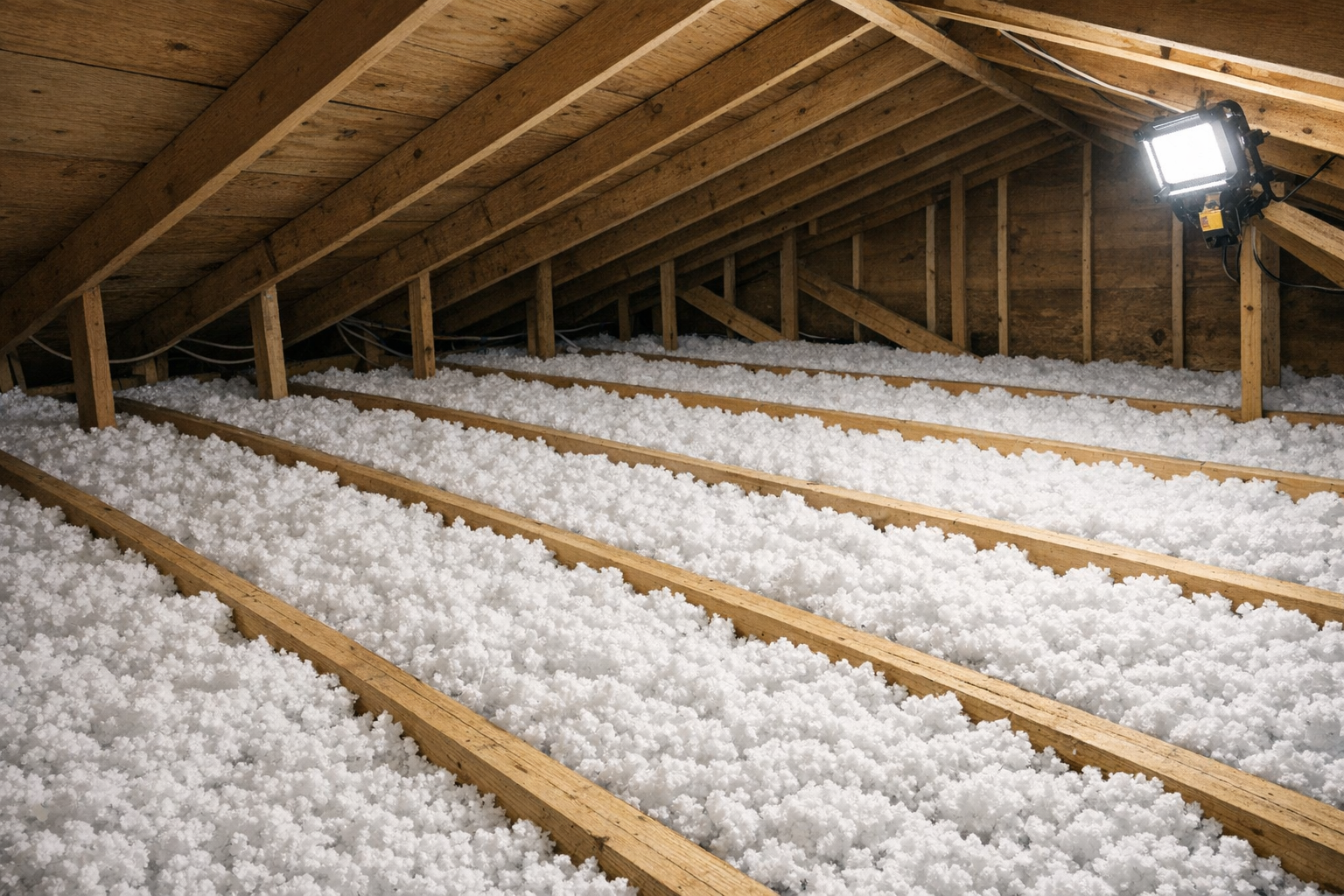
Once the attic is clean and decontaminated, new insulation is installed. The type and amount of insulation depends on your home's needs and local building codes. In most cases, blown-in cellulose or fiberglass insulation is used, as it can be installed efficiently and provides good coverage.
This is also the time to address any structural damage — chewed wiring, damaged wood, or compromised vapor barriers. Any wiring that shows signs of damage should be inspected by an electrician before the new insulation is installed.
A properly restored attic should be cleaner and better insulated than it was before the infestation. Many homeowners are surprised to find that their energy bills actually decrease after attic restoration, because the new insulation is more effective than the old, compressed insulation it replaced.
Does Insurance Cover Attic Restoration?
This is one of the most common questions we get, and the answer is: it depends on your policy. Many homeowner insurance policies cover the damage caused by wildlife — contaminated insulation, chewed wiring, structural damage — but not the cost of removing the animals themselves.
The key is documentation. Before any cleanup begins, we photograph and document all damage thoroughly. This documentation is essential for filing an insurance claim.
We have experience working with insurance adjusters and can help you understand what your policy covers and how to file a claim effectively. In many cases, the restoration work is fully or partially covered, which significantly reduces the out-of-pocket cost for homeowners.
If you're dealing with the aftermath of a wildlife infestation and need attic restoration, call us at (502) 200-9943. We'll assess the damage, provide a detailed quote, and help you navigate the insurance process.